
Roofing in Maitland, FL
Call Us
(407) 305-0865
Leaks and storm damage
Tell us what you are seeing
Maitland and Orange County
Roof work across the city
What Maitland roofs are up against
Maitland has two housing markets stacked on top of each other, and its roof calls show it. A 1965 ranch off Lake Maitland with the original deck under a third covering, and a 2016 townhouse still on its first layer, can sit four streets apart. The city’s median home was built in 1996, but 23.8% of its 10,017 homes predate 1970 while 46.0% went up after 2000. Quoting both of those houses the same way is how a Maitland homeowner ends up paying for a re-cover when a boot and a flashing repair would have held.
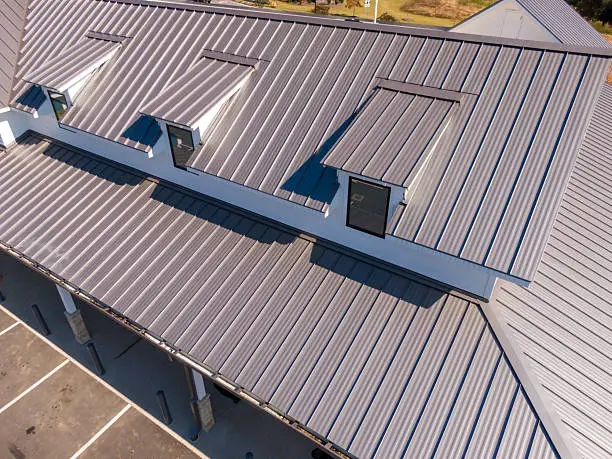
Homes in Maitland, FL
The local picture is set by four things: the ground, the decade, the weather, and which office signs the permit.
Ninety-one feet, five square miles, and a lot of lake frontage
Maitland’s place point sits at about 91 feet above sea level across 5.36 square miles of land, with 1.118 square miles of water inside the city limits. There is no elevation to design for and no snow load to carry. What the number does tell you is how flat the drainage is: at 91 feet, water leaving a roof has nowhere to go quickly, so the roof’s own pitch, its underlayment and its gutters do all the work. The city’s chain of lakes — Maitland, Minnehaha, Nina and the rest — means a large share of the housing sits on ground that stays high in the water table. On those lots a slow leak does not announce itself at the foundation. It shows up as a stain on a ceiling, three feet from where the water actually entered.
When Maitland’s roofs went on
The median year of construction in Maitland is 1996, across 10,017 housing units. That headline hides the split. The 2010s alone account for 26.7% of the stock, 2,673 homes, and 46.0% of the city was built after 2000. At the other end, 15.4% went up in the 1960s, 12.8% in the 1970s and 6.0% in the 1950s, so 23.8% predates 1970. In roofing terms Maitland is a first-covering city on its newer half and a third-covering city on its older half. Roofing on the newer stock is usually storm work and component failure; roofing on the older stock is decking, underlayment and detail metal. The two jobs need different answers, and the address decides which one you have.
The weather these roofs take
The long-record station for this part of Orange County, at Orlando International Airport, averages 50.73 inches of rain a year. June, July and August carry 21.98 inches of that between them, and the July normal maximum is 91.8°F with August at 91.6°F. NOAA’s Storm Events database recorded 45 hail events, 65 thunderstorm wind events, 8 tornadoes and 6 tropical storms across Orange County between 2016 and 2025. Twenty-five of the wind events carried reported property damage. For a Maitland roof that pattern means two different stresses: a covering that is baked for a third of the year and then soaked in a ten-week block, and wind that tests the same ridge, hip and rake edges every season.
Who issues the roofing permit in Maitland
Maitland is in Orange County, and inside the city limits the building permit comes from the City of Maitland’s own Building Division, not from the county. The city’s permitting process page sets out how applications are handled, and it names Bluebeam as the tool used to verify digital signatures on submitted documents, so plans and forms are signed and sealed digitally. That is worth knowing before a job is scheduled, because a submission that fails the signature check is a delay rather than a review comment. The division also handles the inspection side, and on a re-cover the deck is examined before a new layer goes on, which is the point where unexpected sheathing gets found. Permit requirements vary by address, so confirm with the Building Division whether your specific repair is permitted work, and which inspections come with it.
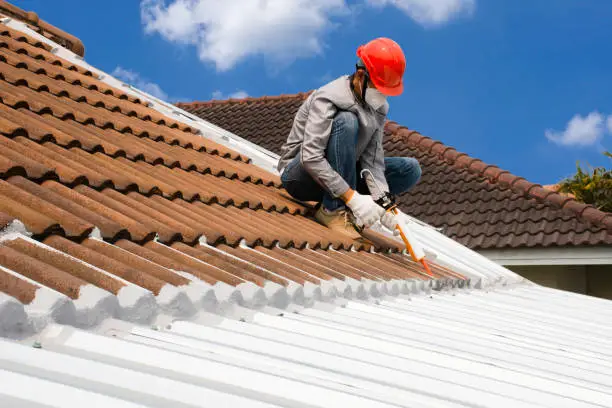
Roofing services in Maitland, FL
Because the stock is split, the work in Maitland runs on two tracks.
On the pre-1970 houses — the 1960s ranches around the lakes and the older streets off Horatio Avenue — the first job is nearly always a detail: a wall junction, a chimney, a vent stack, or the seam where a later addition meets the original roof. That is ordinary roof repair work, and the honest fix is usually metal and underlayment rather than sealant. Where the tile or the shingle is serviceable and the felt beneath it is not, the underlayment is the job, which is what the tile roofing page sets out.
On the post-2000 half the covering is still the controlling factor. A strip and re-cover is covered on the roof replacement page, and the choice between patching and re-covering an existing layer is on the shingle roofing page. Where the pitch is shallow and the surface is sound, a coating can buy years rather than a decade, with the trade-offs on the roof coating page. Homeowners planning past a shingle cycle ask about metal on the larger lots, which the metal roofing page covers.
Flat and low-slope sections over garages, porches and additions are membrane work, set out on the EPDM page. After a storm opens a roof, stopping the water comes first and is covered on the tarping page. Where a wet ceiling has more than one possible cause, the inspection page explains how that is narrowed down, and where an insurer is involved, the insurance claim page covers the documentation a carrier will ask for. Keeping a roof past its first covering is the subject of the maintenance page.
The 1970s cohort is the one that gets misread most often in Maitland: 10.5% of the city, 1,001 homes, typically plywood decking under a first-generation shingle roof that has since been re-covered once. On those houses the second layer is usually still performing while the deck at the chimneys and valleys is not, and the only way to know is to open the roof at the detail rather than to strip the whole field. That assessment is what a first visit is for, and it is cheaper than a full re-cover ordered on the assumption that a 1978 roof must be finished.
Roof work in Maitland, FL
Why homeowners in Maitland choose us
Maitland punishes a roofer who quotes from the street. A 2016 townhouse and a 1965 ranch can look equally sound from the driveway and need completely different work: one a boot and a pan flashing, the other a deck inspection before anything is ordered.
Residential Roofing Orlando reads the decade first, then the attic. The deck gets photographed, the number of layers gets counted, and the cause is written next to the fix on the same sheet. If the repair is small, the report says so and the job stays small. If a first covering from the 2010s has failed at a component rather than at the field of the roof, that distinction is made explicit rather than folded into a re-cover.
What a first visit covers
- We start with the decade the house was built, because it decides whether the deck or the covering is the question.
- The attic gets opened and the deck photographed, including how many layers are already on the roof.
- The leak is traced to its entry point instead of being sealed at the stain on the ceiling.
- You get the cause and the fix written on one page, in the order the work has to happen.
- The permitting authority and the inspection sequence for your street are confirmed before work is booked.
What we check before any work is quoted
- Deck condition: board sheathing on the 1960s houses is the deciding factor, and only the attic answers it.
- Detail metal: wall, chimney and vent flashing on the older stock has usually been sealed repeatedly over corroded metal.
- Pipe boots and pan flashings: the first things to fail on a roof built in the 2010s, and cheap while they are still small.
- Adhesive strips: the line between tabs lets go on the windward slope first, which is why a roof survives one storm and fails the next.
- Ventilation: an under-vented attic shortens the life of every covering above it, whatever the label says.
Why now, before another storm season in Maitland
Maitland’s timing argument is not the same as an older city’s, and it is worth being precise about why.
The newer half is entering its first failure window. 26.7% of the city went up in the 2010s, which puts a large block of Maitland roofs between roughly eight and sixteen years old. That is the age at which the field of a shingle roof is usually still sound and the accessories are not: pipe boots crack, pan flashings lift, valley metal separates from the underlayment, and the adhesive strip between tabs lets go on the slope that takes the wind first. Those are small repairs with a wide window, and they stop being small once water has tracked along a rafter for a season.
The older half is on a different clock. 23.8% of the stock predates 1970, and the underlayment under those roofs has been wet and dry for five or six decades. It fails at one detail, usually in the third week of a wet July, and by then the ceiling below has been wetted twice.
Both halves meet the same wind. Sixty-five thunderstorm wind events across Orange County in ten years is six or seven a year, and each one tests the ridge, the hips and the rake. Insurance underwriting adds the deadline: carriers inspect, surcharge or decline at or past a set roof age, and a first covering that has just passed its warranty window is exactly what a renewal inspection looks at.
There is a drainage argument too, and it is specific to a city with 1.118 square miles of water inside its limits. Maitland’s ground is flat at 91 feet, so the summer rain that arrives in a block has to leave through gutters and grade rather than through fall. When a gutter is undersized or a downspout outlet is buried, the overflow backs up under the eave and rots the fascia from behind. That is a repair in May and a fascia, soffit and eave job by August.
Frequently asked questions about roofs in Maitland
Does a roof repair in Maitland need a permit, and who issues it?
Inside the city limits it comes from the City of Maitland Building Division, not Orange County. The city’s permitting process page explains how applications are handled, and it states that Bluebeam is used to verify digital signatures, so submitted documents must be signed properly. Permit requirements vary by address, so confirm with the Building Division whether your repair needs a permit and which inspections apply before work is scheduled.
Maitland’s median home was built in 1996 — does that mean the roofs are young?
It means the city is split rather than young. 46.0% of the 10,017 homes were built after 2000, including 26.7% in the 2010s, but 23.8% predate 1970 and 15.4% date from the 1960s alone. A 2015 house and a 1965 house need different inspections, and the median tells you nothing about which one you own.
Why would a roof built in the 2010s already need work?
Because age is not the only failure mode. On a roof of that age the field is usually intact and the accessories are not: pipe boots, pan flashings at wall junctions, valley metal and the adhesive strips between tabs. Component failures are cheap to fix early and expensive once the water has found a rafter.
How much hail does Maitland get?
NOAA recorded 45 hail events across Orange County between 2016 and 2025, alongside 65 thunderstorm wind events and 8 tornadoes. Most of it is small hail that bruises the shingle mat under the granules without breaking the surface, so the damage turns up at an inspection months later rather than on the day of the storm.
How long does a 30-year shingle roof last in this climate?
Expect the label to be optimistic here. The airport station averages 50.73 inches of rain a year, 21.98 inches of it in three summer months, with a July normal maximum near 92°F. A thirty-year shingle on a Maitland roof is doing well to reach the mid-twenties, and the roofs that fall short earliest are usually the ones with the least ventilation under them.
What is the 15-year roof rule in Florida?
It is an insurance underwriting practice rather than a building code: many carriers inspect, surcharge or decline at or past fifteen years of roof age. With 26.7% of Maitland built in the 2010s, a large block of the city is about to cross that line for the first time, and an underwriter will want evidence of condition rather than an opinion.
Next step: call (407) 305-0865
Tell us the year the house was built and what you are seeing. Residential Roofing Orlando will say whether the problem is the covering or a component, confirm which authority permits the work on your street, and put the cause and the repair on one page. Call (407) 305-0865.