
Roofing in Apopka, FL
Call Us
(407) 305-0865
Leaks and storm damage
Tell us what you are seeing
Apopka and Orange County
Roof work across the city
What Apopka roofs are up against
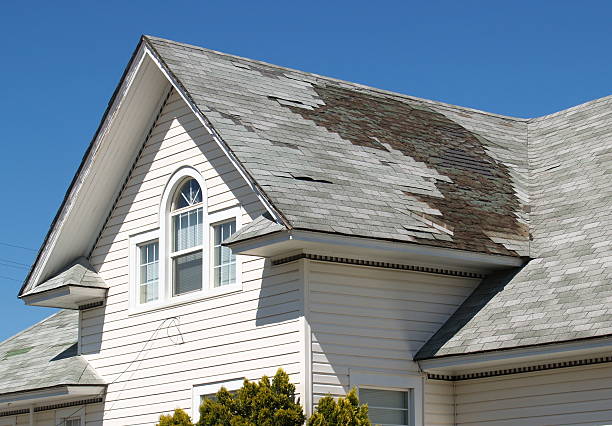
Apopka is the largest city on this list by land, at 35 square miles, and it grew outward rather than upward: the median home was built in 2002 and 54.5% of the 20,183 homes here went up after 2000. That produces a roof problem the denser cities do not have. The typical Apopka roof is a first covering on a house built between 1995 and 2015, sitting on an open lot with little to break the wind, and its first failures are at the edges rather than in the field. Roofing in Apopka is mostly about accessories, wind edges and the long run of gutter that has to move a summer’s rain off a wide roof.
Homes in Apopka, FL
Four things shape the work here: how big and how flat the city is, the two building booms that filled it, the storm record, and the city’s permit department.
Thirty-five square miles, and a lot of open edge
Apopka’s place point sits at about 93.3 feet above sea level, across 35.001 square miles of land with 1.327 square miles of water inside the city limits. There is no snow load and no elevation to design for; the city is broad and largely flat, with lakes scattered through it and open ground on its northern and western edges. That openness is the roofing fact. A roof on a lot with a field or a lake upwind of it takes wind at full speed, with nothing to break it, and the failures show at the rake, the ridge and the gable end rather than in the middle of a slope. On a wide, low roof the gutter run is long too, and the volume of water it has to carry in July is the other thing that goes wrong.
When Apopka’s roofs went on
The median year of construction is 2002, across 20,183 housing units. The 2000s account for 28.1% of the stock, 5,666 homes, the 1990s for 18.1%, the 2010s for 19.2% and the 1980s for 16.5%, so 54.5% is post-2000 and 34.6% dates from the 1980s and 1990s. Only 6.3% predates 1970. In roofing terms Apopka is a first-covering city with a large second-covering belt: the post-2000 houses fail at accessories, and the 1980s and 1990s houses are at the age where a second layer is due or has just gone on over decking nobody has inspected since the first strip. The two bands sit on the same streets in the newer subdivisions.
The weather these roofs take
The long-record station for this part of Orange County, at Orlando International Airport, averages 50.73 inches of rain a year, and 21.98 inches of it falls in June, July and August, with a July normal maximum of 91.8°F. NOAA’s Storm Events database recorded 45 hail events, 65 thunderstorm wind events, 8 tornadoes, 6 tropical storms, 7 flood events and 4 flash floods across Orange County between 2016 and 2025, and 25 of the wind events carried reported property damage. On open ground, wind is the agent that finds the first loose edge, and heat is what loosens it: a tab that has baked through ten Julys no longer seals itself back down after a gust, and the next storm starts from a weaker position.
Who issues the roofing permit in Apopka
Apopka is in Orange County, and inside the city limits the permit comes from the City of Apopka’s own building department rather than from the county. The city publishes its building page directly, which is where a roofing application begins, and plan review and inspections are handled there rather than through Orange County’s portal. Because the city is large and the permit volume follows the subdivisions, the sequence of deck inspection and final is worth diarising at the point the job is booked, not when the covering is already off and the house is open to the weather. Permit requirements vary by address, so confirm with the department whether your specific repair is permitted work, which inspections come with it, and how far ahead the appointments are running.

Roofing services in Apopka, FL
The work here divides by decade, and the split is unusually clean.
On the post-2000 houses the covering is still doing its job and the accessories are not: pipe boots, pan flashings at wall junctions, valley metal, ridge and hip closures, and the sealant strips that hold tabs down. That is ordinary roof repair work, and it stays cheap while it is caught early. Where a first covering has genuinely run its course, the route is set out on the roof replacement page, and the shingle-specific judgement is on the shingle roofing page.
On the 1980s and 1990s houses the deck is the open question, because the second layer hides it. What a strip and re-cover involves is covered on the replacement page above, and where the pitch is shallow and the surface is sound, a coating can buy years rather than a decade, with the trade-offs on the roof coating page.
There is a third case that turns up on the larger lots, and it is worth naming because it is misdiagnosed. A wide roof with long slopes and few penetrations can hold a leak for months without showing it inside, because the water travels a long way along a batten before it finds a ceiling. By the time a stain appears, the deck at the entry point has usually been wet for a season. That is the argument for reading the attic and the perimeter rather than only the room below the mark.
The small pre-1970 remnant at 5.3% is detail work: board sheathing, one layer of felt, wall and chimney flashing. Where tile is sound and the felt beneath it is not, the underlayment is the job, which the tile roofing page explains. Homeowners planning past a shingle cycle on the larger lots ask about metal, covered on the metal roofing page, and flat or low-slope sections over garages and additions are membrane work, with the trade-offs on the EPDM page.
After a storm opens a roof, stopping the water comes first and is covered on the tarping page. Where a wet ceiling has more than one possible cause, the inspection page explains how that is narrowed down, and where an insurer is involved, the insurance claim page covers the documentation a carrier will ask for. Holding a roof past its first covering is the subject of the maintenance page.
Roof work in Apopka, FL
Why homeowners in Apopka choose us
A big, open city rewards a roofer who looks at the edges first. On an Apopka roof the leak usually starts where the wind did: a lifted rake, a hip that has lost its closure, a ridge vent that has separated, or a gable end where the pan flashing was never re-sealed. The middle of the field is usually intact, and a repair aimed at the field will not fix it.
Residential Roofing Orlando inspects the perimeter before the field, photographs what it finds, and checks where the roof discharges on lots this wide. The report names the cause and the repair in the order they have to happen, and it says when a covering still has years left rather than folding a small edge repair into a full replacement.
What a first visit covers
- We walk the perimeter first, because on open ground the wind damage is at the edges.
- The attic is opened and the deck photographed at the penetrations and valleys where plywood goes soft.
- The number of existing layers is counted, so a second covering is discussed with the wood in view.
- You get the cause and the fix on one page, in the order the work has to happen.
- The city permit route and its inspections are confirmed before a start date is fixed.
What we check before any work is quoted
- Rake, ridge and hip edges: the first places wind opens a roof on an exposed lot, and invisible from the driveway.
- Deck condition: 1980s and 1990s plywood under a second layer is the deciding factor on those houses.
- Pipe boots and pan flashings: the first components to fail on a roof built after 2000.
- Gutter capacity and discharge: a wide, low roof moves a lot of water and needs somewhere for it to go.
- Attic ventilation: an under-vented attic shortens the life of every covering above it, whatever the label says.

Why now, before another storm season in Apopka
Apopka’s timing argument is about wind on open ground, and about a specific age band.
Sixty-five thunderstorm wind events across Orange County in ten years is six or seven a year, and 25 of them carried reported property damage. On a lot with open ground upwind, the first thing a gust reaches is the rake and the ridge, and the first thing it takes is a tab whose adhesive has already been dried out by a July at 91.8°F. That damage is invisible from the ground: the tab lies back down, the roof looks intact, and the next storm lifts it again from a weaker position.
The age band sharpens it. 38.8% of the city was built in the 1980s and 1990s, which means a large block of Apopka roofs is between twenty-five and forty-five years old and on a second covering over original plywood. On those houses the deck around the penetrations is the part that has been wet and dried the longest, and a small wind-driven leak at a boot or a ridge becomes a soft deck within a season or two.
The practical cost of waiting is the sequencing. A first covering with a lifted edge is an afternoon of work in the dry months; the same roof after a wet July is an edge repair, a section of deck, insulation and a ceiling. Insurance then adds its own deadline, because carriers inspect, surcharge or decline at or past a set roof age, and a second covering from the 1990s is well past it.
Apopka’s size also has a plain operational consequence. A job at the northern edge and a job at the southern edge are not round the corner from each other, and the travel time is the reason a same-day assessment is worth asking for rather than assuming. Ask what the first visit will actually cover, and whether the person who looks at the roof is the person who writes the report.

Frequently asked questions about roofs in Apopka
Does a roof repair in Apopka need a permit, and who issues it?
Inside the city limits the permit comes from the City of Apopka’s building department, not Orange County. Plan review and inspections are handled by the city, so a re-roof’s deck inspection and final are city appointments. Permit requirements vary by address, so confirm with the department whether your repair is permitted work and which inspections apply before scheduling.
Why do Apopka roofs fail at the edges first?
Because much of the city sits on open ground with little upwind shelter. Wind reaches the rake, ridge and gable end at full speed, and the first thing it finds is a tab whose adhesive strip has already failed in the heat. The middle of a slope is protected by the tabs around it; the perimeter is not.
How old are Apopka’s roofs?
The median home was built in 2002 across 20,183 units, and 54.5% of the city is post-2000. Another 34.6% dates from the 1980s and 1990s, which is the band where a second covering is due or has just been installed, and only 6.3% predates 1970.
How much wind does Apopka actually take?
NOAA recorded 65 thunderstorm wind events and 8 tornadoes across Orange County between 2016 and 2025, with 25 of the wind events carrying reported property damage. That is six or seven wind events a year across the county, and open ground is where each one does its work.
How long does a 30-year shingle roof last in this climate?
Expect the mid-twenties at best. The airport station averages 50.73 inches of rain a year, 21.98 inches of it in three summer months, with a July normal maximum of 91.8°F. Wind exposure on an open lot shortens that further, because every lifted tab weakens the ones beside it.
What is the 15-year roof rule in Florida?
It is an insurance underwriting practice rather than a building code: many carriers inspect, surcharge or decline at or past fifteen years of roof age. With a 2002 median build year, more than half of Apopka has crossed that line, and an underwriter will want evidence of condition rather than an opinion.
Next step: call (407) 305-0865
Tell us the year the house was built and which side of the roof the leak shows on. Residential Roofing Orlando will check the perimeter first, confirm the permit route with the city, and put the cause and the repair on one page. Call (407) 305-0865.