
Roofing in Winter Park, FL
Call Us
(407) 305-0865
Leaks and storm damage
Tell us what you are seeing
Winter Park and Orange County
Roof work across the city
What Winter Park roofs are up against
Winter Park’s leak calls arrive with a pattern. A house built in the 1950s, clay tile or a second layer of shingle sitting on the original deck, and a stain that shows at the same ceiling corner every July and fades by September. The city’s median home went up in 1976, and 39.4% of its 14,213 homes were standing before 1970, so the roof failing now is usually the second or third covering over decking that has never been opened. Roofing in Winter Park is mostly a question of what is underneath.
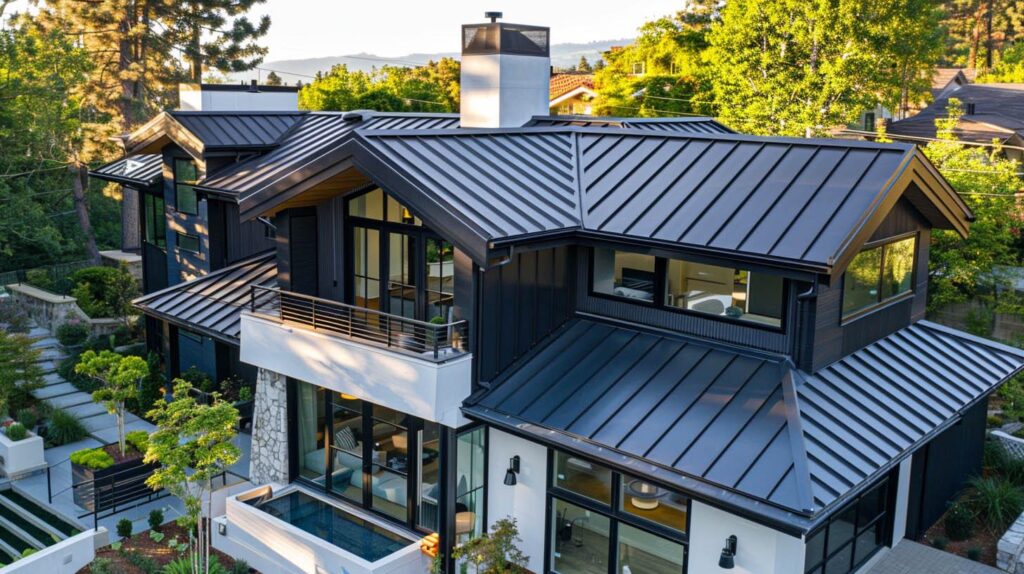
Homes in Winter Park, FL
Four things decide how a roof here behaves: the ground it sits on, the decade it went up, the weather that reaches it, and who signs the permit. Each is specific to this city.
Eighty-six feet up, with lakes on every side
Winter Park’s place point sits at about 86 feet above sea level, spread over 8.77 square miles of land with 1.62 square miles of water inside the city limits. There is no altitude to design for and no snow load to carry; the structural load here is rain, sun and wind. What 86 feet does mean is that nothing sheds water for you. A roof in this city depends entirely on its own pitch, its underlayment and its gutters, because the ground below will not take the water away quickly. Lots that fall toward Lake Osceola, Lake Virginia or the Winter Pines canals collect what the roof releases, and an overflow at the gutter line reads inside the house as a roof leak at the eave. On low ground, the first sign of a worn roof is usually a stain, not a waterfall.
When Winter Park’s roofs went on
The median year of construction in Winter Park is 1976, across 14,213 housing units. The 1950s alone account for 18.4% of them, 2,621 homes, and 39.4% of the city predates 1970. Another 16.8% went up in the 1970s and 10.7% in the 1960s; the 1980s add 12.0%, and 23.9% of the stock is post-2000, including 11.7% built in the 2010s. In roofing terms that is a city of second and third coverings, mostly over original decking. A 1958 house was typically built with tile or three-tab shingle over board sheathing and a single layer of felt, and the felt is now more than sixty years old. A 1978 house sits on plywood with a first-generation shingle roof that has almost certainly been re-covered once.
The weather these roofs take
The long-record station for this part of Orange County, at Orlando International Airport, averages 50.73 inches of rain a year, and 21.98 inches of it falls in June, July and August alone. Its July normal maximum is 91.8°F and August 91.6°F, so the covering is cooked for a third of the year and then hit by rain arriving in a block. NOAA’s Storm Events database logged 45 hail events, 65 thunderstorm wind events, 8 tornadoes and 6 tropical storms across Orange County between 2016 and 2025. Twenty-five of those wind events carried reported property damage. That mix is what ages a Winter Park roof: ultraviolet light dries the shingle mat, wind finds the weakest hip or ridge, and small hail bruises the mat under the granules without breaking the surface.
Who issues the roofing permit in Winter Park
Winter Park is in Orange County, and inside the city limits the building permit comes from the City of Winter Park’s own Building & Permitting Services department, not from the county. The city publishes its roofing inspection codes: 800 for a residential dry-in or roof deck inspection and 803 for a residential roofing final. A roof affidavit, signed by the contractor of record, is required at that final inspection. The city’s inspection guidance also notes that its code allows two layers of roofing material, which is why a re-cover rather than a tear-off is sometimes the permitted route here. Permit requirements vary by address, so confirm the authority for your street, whether the specific repair needs a permit, and which inspections come with it.
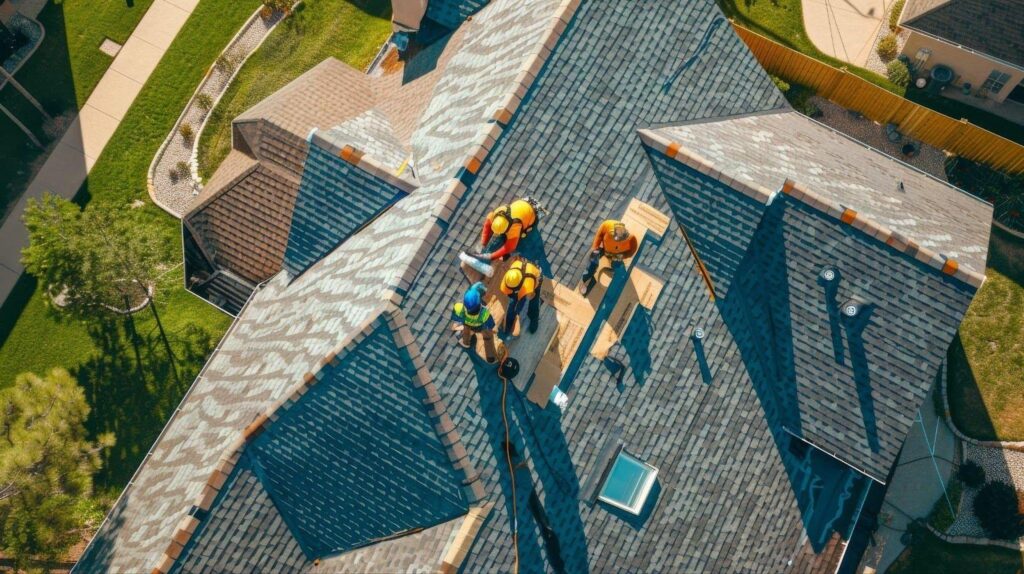
Roofing services in Winter Park, FL
The work in this city runs from a detail repair on a 1950s tile roof to a full tear-off on a 1990s house, and the decade decides which.
On the pre-1970 stock the first job is almost always a detail: a wall junction, a chimney, a vent stack or the seam where an addition meets the original roof. That is the everyday business of the roof repair work, and it is usually a metal-and-underlayment problem rather than a sealant problem. Where the tile is intact but the felt beneath it has gone, the answer is the underlayment, which is what the tile roofing page covers.
On the 1970s and 1980s houses the deck is the real question. A strip and re-cover is set out on the roof replacement page, and the judgement between patching and re-covering an existing layer is on the shingle roofing page. Where the pitch is shallow and the surface is sound, a coating can buy years rather than a decade, with the trade-offs on the roof coating page.
The 1990s and post-2000 houses are mostly first or second covering, architectural shingle, with occasional metal on the larger lots; the metal roofing page sets out what that changes for wind and heat. Flat and low-slope sections over garages, porches and additions are membrane work, covered on the EPDM page.
The 1980s stock is the awkward middle. The covering is usually on its second life and the decking is often still sound, so the question is how much of the surface can be kept rather than whether it comes off. That judgement is made from the attic and the ridge line, not from the driveway.
After a storm opens a roof, stopping the water comes first: the tarping page explains what a proper temporary cover involves. Where a wet ceiling has more than one possible cause, the inspection page covers how that gets narrowed down, and where an insurer is involved, the insurance claim page explains the documentation a carrier will ask for. Keeping a roof past its first covering is the subject of the maintenance page.
Roof work in Winter Park, FL
Why homeowners in Winter Park choose us
Winter Park rewards a roofer who reads the house before the roof. On a 1958 tile house the leak is usually at a detail, and the repair is flashing, not sealant. On a 1978 shingle house the covering may still be serviceable while the deck underneath is gone, and only the attic settles that. On a 2015 build the answer is usually a repair and nothing more.
Residential Roofing Orlando opens the attic, photographs the deck, and writes the cause beside the fix on the same sheet. When a repair is the right spend, that is what gets recommended, even though a re-cover is the larger job. When a roof has years left, the report says so, and the reason is written down rather than implied.
What a first visit covers
- We read the house first: the decade it was built, the covering, and how many layers are on it.
- The attic gets opened and the deck is photographed, because that is what decides repair or re-cover.
- The leak is traced to its entry point rather than sealed at the stain on the ceiling.
- You get the cause and the fix written on one page, in the order the work has to happen.
- Permit authority and inspection sequence for your street are confirmed before anything is scheduled.
What we check before any work is quoted
- Deck condition: original board sheathing on 1950s houses is the deciding factor, and only the attic answers it.
- Detail metal: wall, chimney and vent flashing from the 1950s and 1960s has usually been sealed repeatedly over corroded metal.
- Underlayment: felt laid in the 1950s and 1960s is past its life under tile that still looks sound.
- Sealant strips: on post-2000 roofs the adhesive line between tabs fails on the windward slope first.
- Gutters and fascia: overflow at the gutter line rots the timber behind it and reads inside as a roof leak.
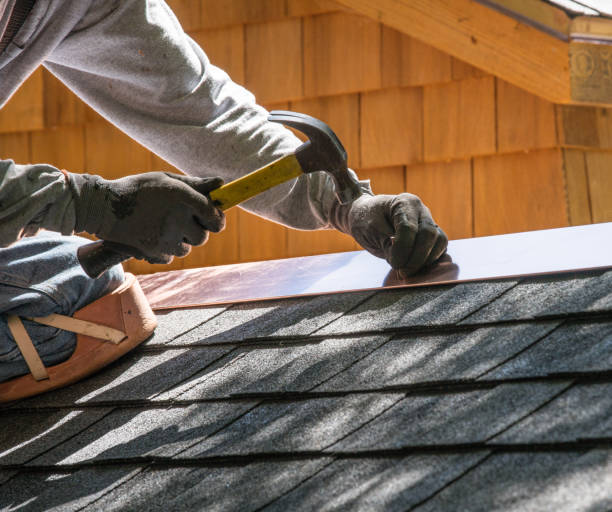
Why now, before another storm season in Winter Park
Timing in this city is set by two numbers that are already fixed: 39.4% of the housing predates 1970, and Orange County took 65 thunderstorm wind events in ten years.
A roof built in 1958 has underlayment that has been wet and dried for six decades. It does not fail slowly and evenly. It fails at one detail, usually in the third week of a wet July, and by then the ceiling below has already been wetted twice. The repair that would have been a flashing replacement in April becomes flashing, deck repair and interior work in August.
The wind side is the same arithmetic. Sixty-five wind events is roughly six or seven a year across the county, and each one tests the same edge: the ridge, the hips, the rake over the gable, and any shingle whose adhesive strip has already let go in the heat. A roof that has lost its seal is not visibly damaged, which is why it survives one storm and fails the next.
Insurance underwriting runs on the same clock. Carriers inspect, surcharge or decline at or past a set roof age, and a roof on a 1976 median house is well into that band. What an underwriter wants is evidence: condition, age, and documentation. That is a report, not an argument, and it is cheaper to produce before a renewal notice than after one.
There is also a sequencing cost that shows up in Winter Park more than in newer cities. When a 1950s tile roof is opened, the deck under it is inspected, and the job cannot be closed again until that inspection has happened. Booked in April, that is a day out of the calendar. Booked in the second week of a wet July, it is a day plus a ceiling, plus whatever the interior work turns into.

Frequently asked questions about roofs in Winter Park
Does a roof repair in Winter Park need a permit, and who issues it?
Inside the city limits the permit comes from the City of Winter Park’s Building & Permitting Services department, not Orange County. The city lists a residential dry-in and roof deck inspection and a residential roofing final, and it requires a roof affidavit signed by the contractor of record at that final. Permit requirements vary by address, so confirm with the city whether your specific repair is permitted work and which inspections apply before anything is scheduled.
How old are Winter Park’s houses, and does that change what a roof needs?
The median home was built in 1976 across 14,213 units, and 39.4% were standing before 1970, including 18.4% from the 1950s. On that stock the covering has usually been replaced at least once and the original decking has not, so the deck and the wall details decide the job. On the 23.9% built after 2000, the covering itself is still the controlling factor.
Does Winter Park allow a new roof over the old one?
The city’s inspection guidance states that its code allows two layers of roofing material, so a re-cover is sometimes the permitted route rather than a full tear-off. That is a code allowance, not a recommendation: a second layer adds weight, hides the deck, and cannot be repeated a third time. Whether it is the right answer for your house depends on the condition underneath.
How much hail does Winter Park actually get?
NOAA recorded 45 hail events across Orange County between 2016 and 2025, alongside 65 thunderstorm wind events and 8 tornadoes. The pattern is frequent and small rather than one large event, and small hail bruises the mat under the granules without breaking the surface. That is why hail damage is usually found at an inspection months later, and why granule loss at valleys and on south-facing slopes is worth reading closely.
How long does a 30-year shingle roof really last here?
In this climate, count on the sun and the rain to take the first decade off the label. The airport station averages 50.73 inches of rain a year with 21.98 inches in three summer months, and a July normal maximum near 92°F. A shingle rated at thirty years is doing well to reach the mid-twenties here, and the houses most likely to be short of that are the ones built before 1970 that are still on an early covering.
What is the 15-year roof rule in Florida?
It is an insurance underwriting practice rather than a building code: many carriers inspect, surcharge or decline at or past fifteen years of roof age. With a 1976 median build year, a large share of Winter Park’s roofs sit past that line. What an underwriter wants is evidence of condition or of replacement, which is a documented answer rather than an argument about how the roof looks from the street.
Next step: call (407) 305-0865
Tell us the decade the house was built, where the stain appears and what sits above it. That usually narrows the cause before anyone climbs. Residential Roofing Orlando will confirm which authority permits the work on your street, describe what the attic shows, and put the cause and the repair on one page. Call (407) 305-0865.
Where we work around Winter Park
Tile Roof Repair in Winter Park
Winter Park’s median home value, about $731,000, is carried on roofs that are often tile — and tile changes the repair conversation. The tiles themselves can outlast the roof system beneath them: it is the underlayment that ages out, typically decades before the tile does, which is why a tile roof can look sound from the street and leak at every valley. Tile work here means lifting and relaying sound tile, replacing failed underlayment, and matching profiles and colours that may have been discontinued since the house was built — on the lakefront streets and the older avenues alike, that matching is half the craft. Call (407) 305-0865.