
Roofing in Oviedo, FL
Call Us
(407) 305-0865
Leaks and storm damage
Tell us what you are seeing
Oviedo and Seminole County
Roof work across the city
What Oviedo roofs are up against
Oviedo is a young city by any measure: 2.8% of its 14,191 homes predate 1970, and 28.6% went up in the 1990s alone. The median home dates from 1997. That profile changes what a roof problem looks like here. There is almost no third-covering stock and very little original decking left to find, so the calls that come out of Oviedo are about first coverings reaching the end of their accessories and second coverings reaching the end of their lives at the same time. Roofing in Oviedo is a scheduling conversation as much as a repair one, because a whole decade of roofs entered the same window together.
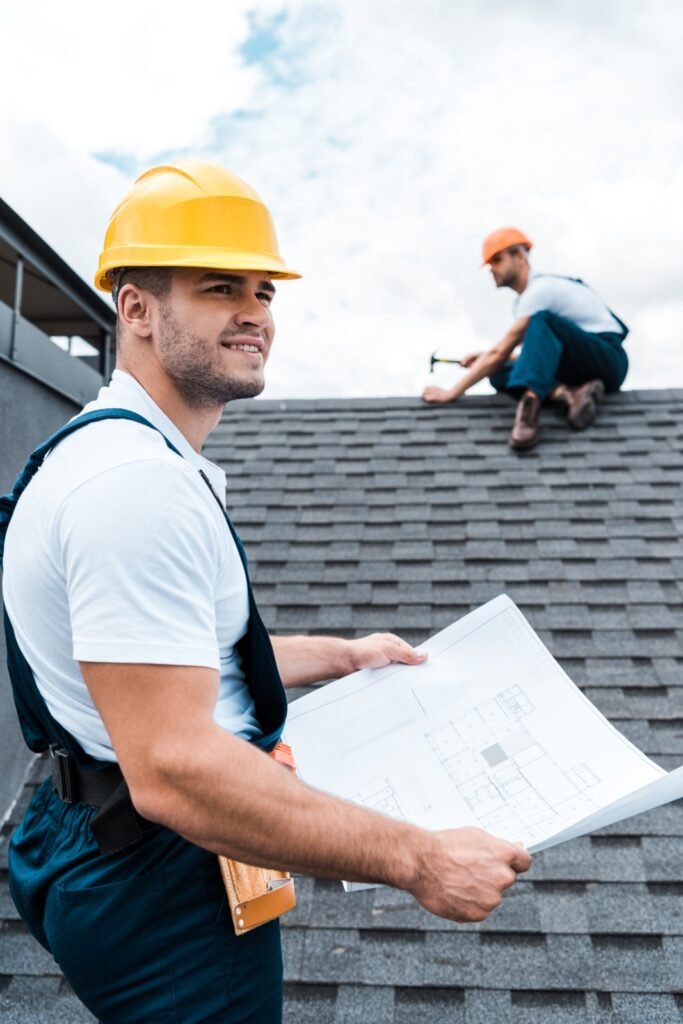
Homes in Oviedo, FL
Four things set the terms here: low, flat ground, a single dominant building decade, the Seminole County storm record, and the city’s building division.
Fifty-one feet, fifteen square miles, and flat ground
Oviedo’s place point sits at about 51.3 feet above sea level, across 15.535 square miles of land with 0.277 square miles of water inside the city limits. There is no snow load and no elevation to design for. The city is low and flat, with the Econlockhatchee and Little Econ running along its edges, so water leaving a roof has very little fall to help it away and the ground it lands on is often already wet. On a lot graded in the 1990s, the roof’s discharge was designed to reach a swale or a street, and two decades of landscaping later that route is frequently blocked by beds, fences and extensions. Water that leaves a roof correctly can still arrive at a wall, which is why the discharge is part of the assessment rather than an afterthought.
When Oviedo’s roofs went on
The median year of construction is 1997, across 14,191 housing units. The 1990s account for 28.6% of the stock, 4,060 homes, the 2000s for 24.1%, the 1980s for 23.0% and the 2010s for 14.6%. Only 2.8% predates 1970, and just 4.9% dates from the 1970s. In roofing terms Oviedo has no old city to work around: 51.6% was built between 1980 and 1999, and 40.7% after 2000, so a roofer here spends the day on plywood from one era rather than on board sheathing from three. That means the majority of roofs here are on a first or second covering installed on mid-1980s to late-1990s plywood, and the failures are accessory failures on the newer half and early second-covering wear on the older half.
The weather these roofs take
The long-record station for this part of Central Florida, at Orlando International Airport, averages 50.73 inches of rain a year, with 21.98 inches of it in June, July and August, and a July normal maximum of 91.8°F. NOAA’s Storm Events database recorded 45 hail events, 30 thunderstorm wind events, 4 tornadoes, 6 tropical storms, 6 flood events and 3 flash floods across Seminole County between 2016 and 2025. The hail arrived in bursts rather than evenly: 17 events in 2020 and 11 in 2022, against a single event in 2019. On flat ground that means bruising in one afternoon and then a long, wet summer testing every detail the hail loosened, at a discharge point that is often already struggling.
Who issues the roofing permit in Oviedo
Oviedo is in Seminole County, and inside the city limits the permit comes from the City of Oviedo’s own Building Division rather than from the county. The city runs its building permit applications online, which is where a roofing application starts, and the division handles plan review and inspections for work inside the city. That matters on a re-roof in a city where so much of the stock is the same age, because the deck inspection appointments queue when a neighbourhood re-roofs together, and a house under temporary cover is not a house you want to leave waiting. Permit requirements vary by address, so confirm with the division whether your specific repair is permitted work and which inspections come with it.
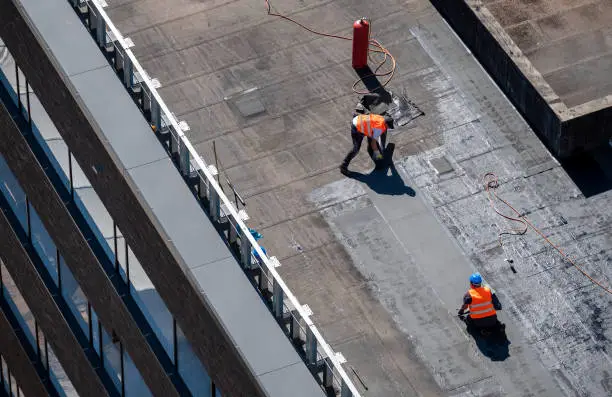
Roofing services in Oviedo, FL
Most of the work in this city is on roofs between fifteen and forty years old, which puts the diagnosis in the accessories and the second covering.
On the 1980s and 1990s houses the covering is either the original second layer or a re-cover from the 2000s, and the deck under it is the open question. What a strip and re-cover involves is set out on the roof replacement page, and the judgement between patching and re-covering an existing layer is on the shingle roofing page.
On the post-2000 houses the field is usually sound and the accessories are not: pipe boots, pan flashings at wall junctions, valley metal and ridge closures. That is ordinary roof repair work, and it is the cheapest work on this page while it stays small. A single boot that has split at the collar admits water straight onto the deck, and on a house from 2008 the deck around it is usually sound, which makes the repair genuinely small. The same boot left through two summers is a rotten sheet and a stained ceiling. Where the pitch is shallow and the surface is sound, a coating can buy years rather than a decade, with the trade-offs on the roof coating page.
The tiny pre-1970 remnant, 2.3% of the city, is the exception that needs a different method: board sheathing, a single layer of felt, and flashing formed on site. Where tile is sound and the felt beneath it is not, the underlayment is the job, which the tile roofing page explains. On a house from the 1980s with a shallow pitch over a porch, the coating route is worth pricing against a strip before either is ordered, because the two jobs answer the same question with a different lifespan. Homeowners planning past a shingle cycle ask about metal, covered on the metal roofing page, and flat or low-slope sections over garages and additions are membrane work, with the trade-offs on the EPDM page.
After a storm opens a roof, stopping the water comes first and is covered on the tarping page. Where a wet ceiling has more than one possible cause, the inspection page explains how that is narrowed down, and where an insurer is involved, the insurance claim page covers the documentation a carrier will ask for. Holding a first covering past its accessories is the subject of the maintenance page.
Roof work in Oviedo, FL
Why homeowners in Oviedo choose us
On a roof of this age the difference between a repair and a replacement is usually one component, and the temptation is to sell the bigger job on a roof that still has years in the field. A 2004 Oviedo house with a stain under a vent stack does not need a new roof; it needs a boot and a check of the deck around it.
Residential Roofing Orlando checks the accessories before the field on the newer stock, and the deck before the covering on the 1990s stock. The findings are photographed and written down, including the parts that did not need work, so a homeowner can see what was ruled out as well as what was found, and can compare that with whatever else they are quoted.
What a first visit covers
- We check the accessories before the field on the newer roofs, because that is where most Oviedo leaks start.
- The attic is opened and the deck photographed at the valleys and penetrations.
- The number of existing layers is counted on the 1980s and 1990s houses.
- You get the cause and the fix on one page, in the order the work has to happen.
- The city permit route and its inspections are confirmed before a start date is fixed.
What we check before any work is quoted
- Pipe boots and pan flashings: the first components to fail on a roof built after 2000.
- Deck condition: 1980s and 1990s plywood under a second layer is the deciding factor on that half of the city.
- Valley metal: it separates from the bedding it was set into and the gap is invisible from outside.
- Attic ventilation: an under-vented attic shortens the life of every covering above it, whatever the label says.
- Gutters and swales: on flat ground, the route the roof water takes is part of the roof's job.

Why now, before another storm season in Oviedo
Oviedo’s timing argument is unusual for this group: almost the entire city reaches the same milestone in the same few years.
Fifty-one point five percent of the housing was built between 1980 and 1999. A roof installed in 1996 is now past thirty years; a roof installed in 1988 is past thirty-five. Those are the years in which a second covering’s field starts to fail at the same time as its accessories, and in which the deck underneath has had two decades of summer rain. Because the neighbourhoods were finished within a year or two of each other, the failure arrives street by street rather than house by house. Fifties and sixties houses are so rare here that the usual third-covering questions do not apply; what applies is the second layer and the wood beneath it, on a stock that has never had a strip.
The hail record makes the timing sharper. Seventeen hail events across Seminole County in 2020 and eleven in 2022, against one in 2019, is not a steady pattern; it is bursts. Small hail bruises the mat under the granules without breaking the surface, and a bruised mat on a thirty-year-old covering fails earlier than an unbruised one.
Insurance sets the deadline homeowners feel. Carriers inspect, surcharge or decline at or past a set roof age, and a roof from the 1990s is well past it. There is also a plain arithmetic point about a neighbourhood built at once. When several houses on a street need a deck inspection in the same month, the queue moves, and a job booked late in the dry season can end up finishing in the wet one. That is not a sales argument; it is the reason the same repair costs more in August than in April, because a roof that is open when the rain arrives needs temporary cover, and temporary cover needs replacing. On a street where every house is the same age, the renewals arrive together too, and documentation of condition is worth more before that letter than after it.
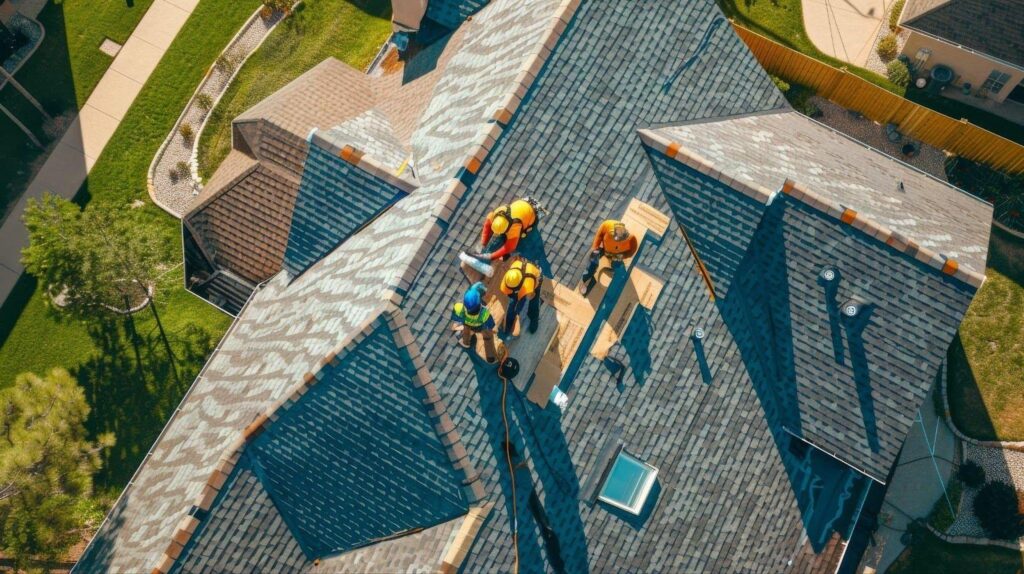
Frequently asked questions about roofs in Oviedo
Does a roof repair in Oviedo need a permit, and who issues it?
Inside the city limits the permit comes from the City of Oviedo’s Building Division, not Seminole County. The city runs building permit applications online and the division handles plan review and inspections for work inside Oviedo. Permit requirements vary by address, so confirm with the division whether your repair is permitted work and which inspections apply.
Why are so many Oviedo roofs the same age?
Because the city was built in one long push. 28.6% of its 14,191 homes date from the 1990s, 24.1% from the 2000s and 23.0% from the 1980s, against 2.8% before 1970. Neighbourhoods finished within a year or two of each other reach the end of a covering within a year or two of each other.
Does Oviedo have any old roofs to worry about?
Very few. Only 2.8% of the housing predates 1970 and 4.9% dates from the 1970s, so board sheathing and original felt are rare here. The work is dominated by first and second coverings on plywood from the 1980s and 1990s.
How much hail does Oviedo get?
NOAA recorded 45 hail events across Seminole County between 2016 and 2025, but in bursts: 17 in 2020 and 11 in 2022, against a single event in 2019. Bursts matter when a whole neighbourhood’s roofs went on in the same two or three years.
How long does a 30-year shingle roof last in this climate?
Expect the mid-twenties. The airport station averages 50.73 inches of rain a year, 21.98 inches of it across three summer months, with a July normal maximum of 91.8°F. A second covering installed on a 1990s Oviedo house in the mid-2000s is already in the last quarter of that life.
What is the 15-year roof rule in Florida?
It is an insurance underwriting practice rather than a building code: many carriers inspect, surcharge or decline at or past fifteen years of roof age. With a 1997 median build year, most of Oviedo is past that line, and an underwriter will want evidence of condition rather than an opinion.
Next step: call (407) 305-0865
Tell us the year the house was built, what you are seeing inside, and whether the roof has been replaced once already. That is enough to narrow most Oviedo leaks before a ladder goes up. Residential Roofing Orlando will confirm the permit route with the city and put the cause and the repair on one page. Call (407) 305-0865.
Where we work around Oviedo
The Replacement Wave in Oviedo
Oviedo’s growth built whole subdivisions in single decades, and subdivisions built together age together: the roofs across a street tend to reach the end of their first covering within a few years of each other. With about 76.7 percent of homes owner-occupied, those decisions are made at kitchen tables, and they are increasingly insurance-shaped as much as weather-shaped — a carrier asking for a roof’s age and condition before renewal. The practical answer is a documented inspection before the letter arrives: covering condition, decking, penetrations and ventilation, recorded with photographs, so the choice between targeted repair and planned replacement is made on evidence rather than on a deadline. Under Florida Statute 627.7011, an insurer cannot refuse to issue or renew a homeowner policy solely because of a roof’s age when the roof is less than 15 years old — and for an older roof, an inspection showing remaining useful life carries weight. That is why the inspection report matters as much as the repair: dated photographs and a written condition statement are what an underwriter reads. Call (407) 305-0865.