
Roofing in Edgewood, FL
Call Us
(407) 305-0865
Leaks and storm damage
Tell us what you are seeing
Edgewood and Orange County
Roof work across the city
What Edgewood roofs are up against
Edgewood is the smallest city in this group: 1,239 homes, about 2,760 people, and 1.237 square miles of land. That scale changes the roofing conversation in a way that is easy to miss. Nearly half the housing went up in the 1970s, 44.9% of it, and the median home dates from 1978, so the city’s roofs are almost all on a second or third covering over decking that has been in place for close to fifty years. In a city this small there are no new subdivisions to average out the age. Roofing in Edgewood is old-roof work on a compact stock, where the deck and the wall details decide the job rather than the shingle.
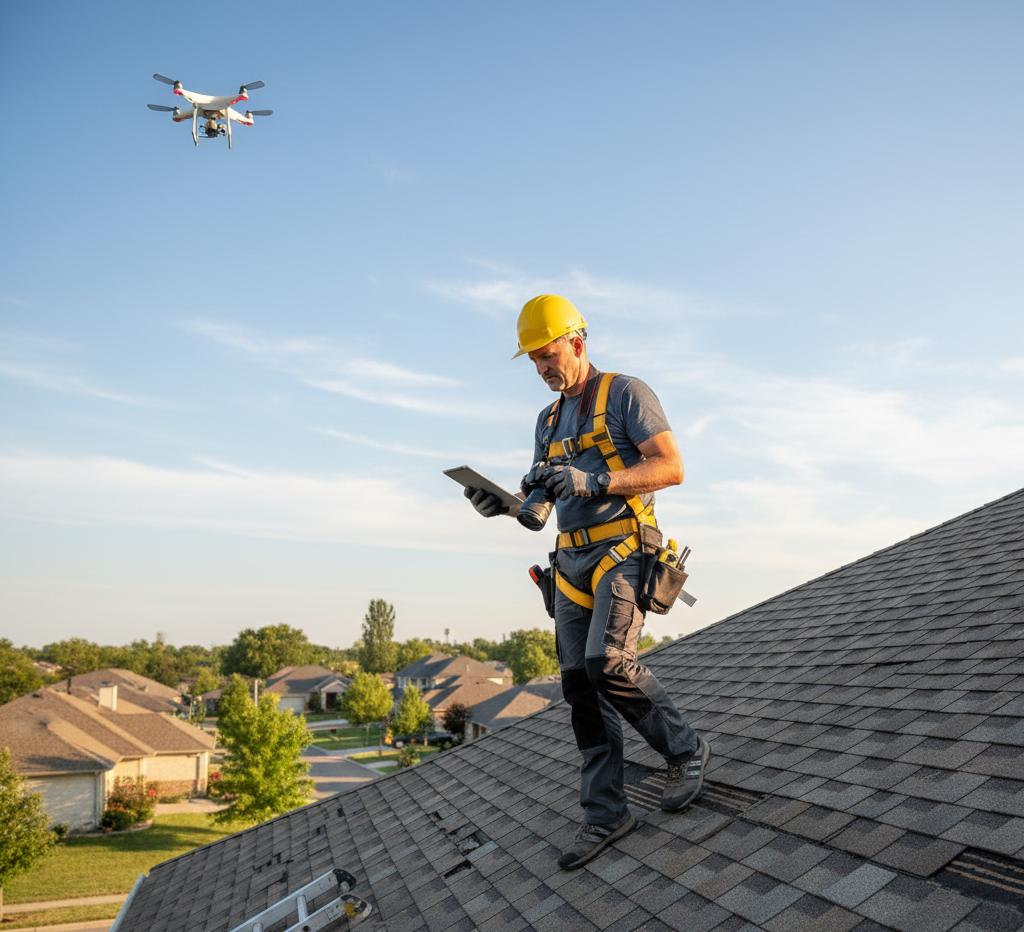
Homes in Edgewood, FL
Four things set the terms here: a compact, low-lying footprint, one dominant building decade, the Orange County storm record, and an address-by-address permit question.
A small city on low ground, close to water
Edgewood’s place point sits at about 94.5 feet above sea level, across 1.237 square miles of land with 0.298 square miles of water inside the city limits. There is no snow load and no elevation to design for. What matters is the scale: the city is compact and flat, ringed by the Orlando urban area, with lakes inside and around it. On lots this close together, roof water from one house reaches the next lot quickly, and a gutter that discharges at a property line is a drainage problem for two households rather than one. In a small city the eave, the gutter and the grade at the foundation are shared facts, and that is why a leak at the wall is worth reading as a drainage question before it is read as a roof failure, especially on a lot that has been regraded since.
When Edgewood’s roofs went on
The median year of construction is 1978, across 1,239 housing units. The 1970s alone account for 44.9% of the stock, 556 homes, the 1980s for 13.3%, the 2000s for 16.4% and the 1990s for 6.5%, with 12.1% predating 1970 overall and 23.2% built after 2000. In roofing terms Edgewood is a single-cohort city: a house built in the 1970s has probably been re-covered twice, the layer on it now is the third, and the plywood beneath has been penetrated and re-nailed for five decades. The newer fifth of the city is on first or second coverings and reads completely differently at the deck. There is no street in this city where the 1970s cohort is not the main fact, which is why the address and the attic decide every quote here rather than a city-wide figure.
The weather these roofs take
The long-record station for this part of Orange County, at Orlando International Airport, averages 50.73 inches of rain a year, with 21.98 inches of it in June, July and August, and a July normal maximum of 91.8°F. NOAA’s Storm Events database recorded 45 hail events, 65 thunderstorm wind events, 8 tornadoes, 6 tropical storms, 7 flood events and 4 flash floods across Orange County between 2016 and 2025, with 25 of the wind events carrying reported damage. On a roof that is already forty-five years old, the hail matters less than the wetting: a bruised mat and a tired valley together are what turn a small leak into a deck repair, and a compact city means the same storm reaches every one of them.
Who issues the roofing permit in Edgewood
Edgewood is in Orange County, and the permitting authority for a roof depends on the address rather than on a single city counter. We could not confirm a current building-permit page on the city’s own site when we checked, so this page will not name an office it could not verify. Permit requirements vary by address: confirm the authority for your street, whether the specific repair needs a permit, which inspections come with it and how long the appointments are running before work is booked. On a third-covering house that call is worth making early, because the deck inspection is the step that decides whether the job stays a re-cover or becomes a strip with carpentry, and the two carry very different timetables.
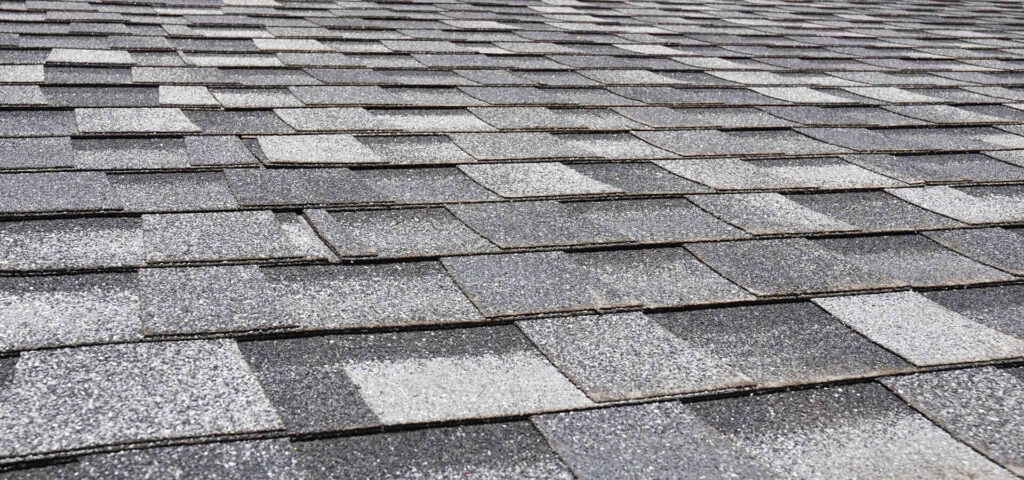
Roofing services in Edgewood, FL
Almost everything here begins with a deck question, because the covering on most of these houses has been replaced at least once and the wood underneath has not been seen since.
On the 1970s and 1980s houses a strip and re-cover is the honest route more often than a patch, and what it involves is set out on the roof replacement page. On a house built in 1974 the layer on the roof is usually the third, and the cheapest way to decide about a fourth is to look at the deck at a valley and at the chimney pan. The judgement between patching and re-covering an existing layer is on the shingle roofing page, and the third-layer question is answered by opening the roof rather than by counting layers from the driveway.
The 1950s and 1960s stock at 9.3% of the city is the detail work: board sheathing, a single layer of felt, wall junctions and chimney flashing formed on site. That is ordinary roof repair work, and the lasting fix is metal and underlayment rather than sealant. Where tile is sound and the felt beneath it is not, the underlayment is the job, which the tile roofing page explains.
The small post-2000 minority is the other way round: a first or second covering whose accessories are the weak point, so pipe boots, pan flashings and valley metal are the usual failures. Where the pitch is shallow and the surface is sound, a coating can buy years rather than a decade, with the trade-offs on the roof coating page. Homeowners planning past a shingle cycle ask about metal, covered on the metal roofing page, and flat or low-slope sections over garages and additions are membrane work, with the trade-offs on the EPDM page.
After a storm opens a roof, stopping the water comes first and is covered on the tarping page. Where a wet ceiling has more than one possible cause, the inspection page explains how that is narrowed down, and where an insurer is involved, the insurance claim page covers the documentation a carrier will ask for. Holding a third covering in place is the subject of the maintenance page.
Roof work in Edgewood, FL
Why homeowners in Edgewood choose us
In a city this small, the useful thing a roofer can bring is patience with old houses. A 1974 Edgewood roof has three layers of history in it, and the only way to know what the fourth would sit on is to open it at a valley and look at the sheathing. That is a slower first visit than a driveway quote, and it is the only one that produces an answer worth acting on in a city where the stock is this uniform in age.
Residential Roofing Orlando opens the roof and the attic, photographs the deck and the detail metal, and counts the layers before discussing another one. The report says when a re-cover is genuinely sensible and when the strip is the cheaper answer over the next twenty years, and it puts the reasoning in writing so a homeowner can weigh it without pressure from whoever is standing on the roof.
What a first visit covers
- We count the layers first, because most of this city is on a second or third covering.
- The roof is opened at a valley and the attic checked, so the deck is seen rather than assumed.
- We photograph the detail metal, since a 1970s flashing is often original and painted over.
- You get the cause and the fix on one page, in the order the work has to happen.
- The permit authority for your street and its inspections are confirmed before work is booked.
What we check before any work is quoted
- Deck condition: 1970s plywood that has carried two re-covers is the deciding factor in most of this city.
- Layers on the roof: what is already there sets whether another layer is sensible at all.
- Valley metal and chimney pans: where water sits longest and where a third covering fails first.
- Original wall flashing on the 1950s and 1960s houses: formed on site and sealed repeatedly over corroded metal.
- The discharge and the grade: on lots this close together, roof water arrives at the next property line.
Why now, before another storm season in Edgewood
Edgewood’s timing argument is the simplest in this group: almost the whole city is on the same clock, and it has been running for a long time.
Seventy point two percent of the housing predates 1990, and 44.9% of it dates from the 1970s alone. Those roofs have carried two or three coverings. The plywood under them has been penetrated, re-nailed and patched, and it fails where water sits longest: the valleys, the chimney pans, the penetrations and the low side of an addition. That failure does not announce itself. It shows as a shingle that will not stay flat, a soft spot a roofer finds by walking the roof, or a stain that appears a season after the storm that caused it.
There is a second reason the calendar matters here: Edgewood is compact, so a job left open in the wet season is exposed to the same rain whichever side of the city it is on. Weight is the part homeowners underestimate. Every additional layer loads a structure designed in the 1970s, hides the deck, and forecloses the next decision. On a house that has already had two re-covers, a third is often the point at which the strip becomes the cheaper option over twenty years rather than the more expensive one today.
Weather supplies the deadline, and in a small city it arrives all at once. Sixty-five thunderstorm wind events and 45 hail events across Orange County in ten years is six or seven wind events a year, and each one tests a ridge, a hip and a rake that are already old. Insurance adds the last constraint: carriers inspect, surcharge or decline at or past a set roof age, and a third covering on a 1974 house is far past that line.

Frequently asked questions about roofs in Edgewood
Does a roof repair in Edgewood need a permit, and who issues it?
The permitting authority depends on the address, and we could not confirm a current building-permit page on the city’s own site, so we will not name an office we could not verify. Permit requirements vary by address: confirm the authority for your street, whether the repair needs a permit and which inspections come with it before work is booked.
Can an Edgewood roof take a fourth layer?
Usually not, and the deck decides. 44.9% of the city dates from the 1970s and most of those houses have already been re-covered twice, so the plywood has been nailed through repeatedly. Another layer adds weight and hides the deck, which is why the strip is often the cheaper answer over the next twenty years.
How old are Edgewood’s roofs?
The median home was built in 1978 across 1,239 units, with 44.9% from the 1970s and 12.1% predating 1970. 70.2% was standing before 1990, and 23.2% is post-2000, so nearly every roof in the city is on a second or third covering.
Does a small city get less storm damage?
No. The storm record is county-wide: 45 hail events, 65 thunderstorm wind events, 6 tropical storms and 7 flood events across Orange County between 2016 and 2025. A compact city simply means the same weather reaches every roof in it, rather than being spread across a wide area, and with 70.2% of the housing pre-1990 that weather is reaching roofs that have already been through decades of it.
How long does a 30-year shingle roof last in this climate?
Expect the mid-twenties at best. The airport station averages 50.73 inches of rain a year, 21.98 inches of it in three summer months, with a July normal maximum of 91.8°F. On a 1970s Edgewood house the more useful question is how long the deck lasts, because that is what decides the second and third covering.
What is the 15-year roof rule in Florida?
It is an insurance underwriting practice rather than a building code: many carriers inspect, surcharge or decline at or past fifteen years of roof age. With a 1978 median build year and 70.2% of the city pre-1990, almost every roof in Edgewood is past that line.
Next step: call (407) 305-0865
Tell us the year the house was built, how many times the roof has been replaced, and where the water shows inside. Residential Roofing Orlando will open the roof at a valley, photograph the deck, say whether another layer is sensible, and confirm which authority permits the work on your street. Call (407) 305-0865.