
Roofing in Belle Isle, FL
Call Us
(407) 305-0865
Leaks and storm damage
Tell us what you are seeing
Belle Isle and Orange County
Roof work across the city
What Belle Isle roofs are up against
Belle Isle has more water inside its limits than land: 2.783 square miles against 2.4, in a city of 3,040 homes. Almost every house sits close to a lake or a canal, and 36.7% of the housing was standing before 1970, including 17.2% from the 1950s alone, against a median build year of 1977. The typical Belle Isle roof is a second or third covering on a low, waterside house, where humidity, shade and debris in the valleys do as much damage as the sun. Roofing in Belle Isle starts with recognising that this is a moisture problem before it is a shingle problem.
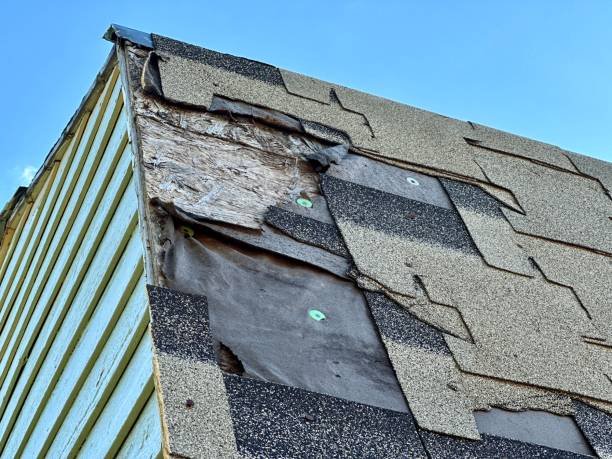
Homes in Belle Isle, FL
Four things shape the work here: water on every side, an old and uneven housing stock, the Orange County storm record, and an address-based permit question.
More water than land, and what that means at the eave
Belle Isle’s place point sits at about 94.7 feet above sea level, across 2.4 square miles of land with 2.783 square miles of water inside the city limits. There is no snow load and no elevation to design for. What the water does is keep the air around these roofs humid for most of the year, and it keeps the lots shaded, because a canal-front or lakefront property usually has mature trees within falling distance of the roof. Both shorten a roof’s life in ways the sun gets blamed for. Shade keeps a surface cool enough to stay damp after rain, debris fills the valleys and gutter runs, and moss and algae take hold on the north slope. That is why the valleys and the gutter line, not the open field of shingles, are where a Belle Isle roof tells you it is finished.
When Belle Isle’s roofs went on
The median year of construction is 1977, across 3,040 housing units. The 1970s account for 19.9% of the stock, the 1980s for 19.1%, the 1950s for 17.2% and the 1960s for 16.0%, with 36.7% predating 1970 and only 12.1% after 2000. In roofing terms Belle Isle is an old-stock city with two distinct cohorts: a 1950s and 1960s group on board sheathing and a single layer of felt, where the underlayment is now the failure point, and a 1970s and 1980s group on plywood that has carried a second covering and is due a third. A 1965 house and a 1985 house on the same canal have almost nothing in common at the deck.
The weather these roofs take
The long-record station for this part of Orange County, at Orlando International Airport, averages 50.73 inches of rain a year, with 21.98 inches of it in June, July and August, and a July normal maximum of 91.8°F. NOAA’s Storm Events database recorded 45 hail events, 65 thunderstorm wind events, 8 tornadoes, 6 tropical storms, 7 flood events and 4 flash floods across Orange County between 2016 and 2025, with 25 of the wind events carrying reported damage. On a waterside lot the wind arrives with nothing to slow it across the water, and the rain that follows has nowhere to drain to, because the lake it discharges toward is already at its level and the canals have nowhere higher to send it.
Who issues the roofing permit in Belle Isle
Belle Isle is in Orange County, and the permitting authority for a roof depends on the address rather than on a single counter we could confirm. We could not read a current building-permit page on the city’s own site when we checked, so this page will not name an office it could not verify. Permit requirements vary by address: confirm the authority for your street, whether the specific repair needs a permit, and which inspections come with it before work is booked. On a 1950s waterside house that call is worth making early, because the deck inspection is the appointment that decides whether the job is a re-cover, a strip, or a strip plus sheathing, and the three are priced very differently.

Roofing services in Belle Isle, FL
On water, the work splits between the old stock’s underlayment and the newer stock’s accessories.
On the 1950s and 1960s houses, 34.9% of the city, the covering is often still serviceable while the felt beneath it is finished. That is ordinary roof repair work, and where tile is sound and the felt is not, the underlayment is the job, which the tile roofing page explains. On the shingle houses of that era, the same logic applies to a strip and re-cover, set out on the roof replacement page, with the patch-or-re-cover judgement on the shingle roofing page.
On the 1970s and 1980s houses the second covering is usually in place and the deck is the question, particularly in the valleys where debris has sat and stayed wet. A valley that has held leaf litter for ten summers is the most common place a Belle Isle strip uncovers sheathing that has to come out. Where the pitch is shallow and the surface is sound, a coating can buy years rather than a decade, with the trade-offs on the roof coating page. Homeowners planning past a shingle cycle on a larger lot ask about metal, covered on the metal roofing page.
Flat and low-slope sections over garages, porches and additions are membrane work, with the trade-offs on the EPDM page. After a storm opens a roof, stopping the water comes first and is covered on the tarping page. Where a wet ceiling has more than one possible cause, the inspection page explains how that is narrowed down, and where an insurer is involved, the insurance claim page covers the documentation a carrier will ask for. Keeping a waterside roof clear is the subject of the maintenance page.
Roof work in Belle Isle, FL
Why homeowners in Belle Isle choose us
A waterside roof fails from the bottom up more often than from the top down, which is why the shingle count on a Belle Isle house tells you very little on its own. On a canal-front Belle Isle house the shingles can look sound while the felt beneath them is gone and the deck at the valley has been damp for two seasons, and the only way to know is to open it.
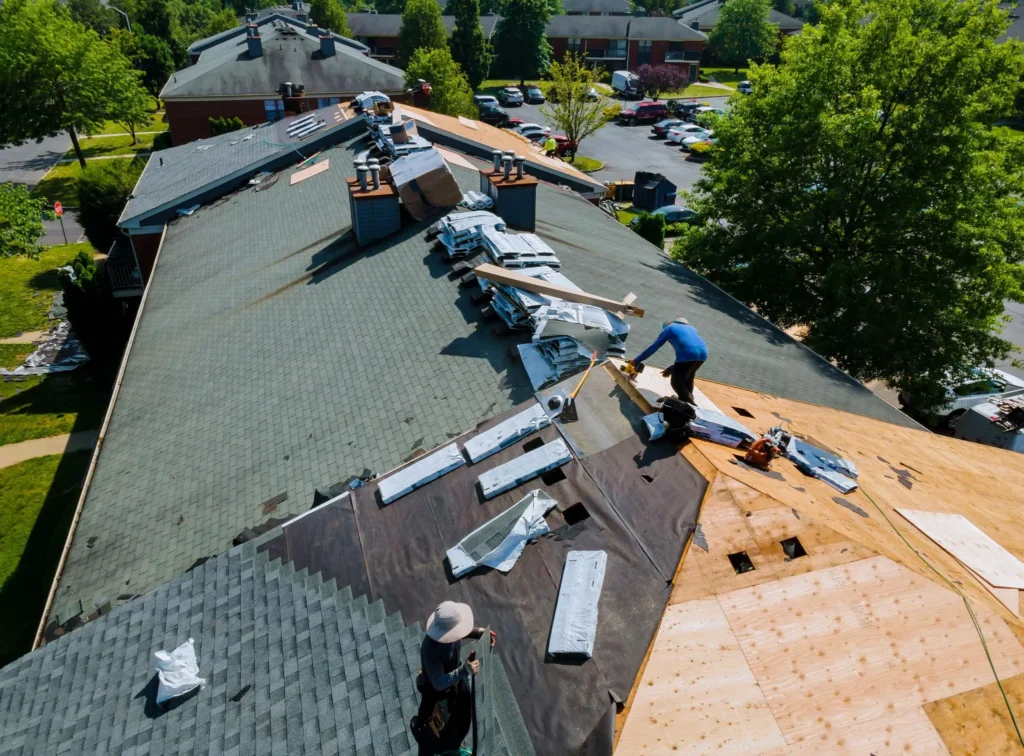
Residential Roofing Orlando opens the roof at a valley and the attic above the wettest room, photographs the deck, and checks the gutter runs for the debris that causes half the trouble here. The report says whether the covering or the underlayment is the failing layer, because on a 1958 house those are two different jobs with two very different footprints, and the cheaper one is sometimes the right one. A written scope is also the only way to compare two quotes here, because a re-cover and a strip are both called a new roof in conversation and are nothing alike in what they leave behind. Ask which layers come off, what happens at the valleys, and whether the deck is priced separately.
What a first visit covers
- We open the roof at a valley first, because on a waterside lot that is where felt fails.
- The attic above the wettest room is checked and the deck photographed.
- We look at the gutter runs for the leaf litter that causes half the trouble here.
- You get the cause and the fix on one page, in the order the work has to happen.
- The permit authority for your street and its inspections are confirmed before work is booked.
What we check before any work is quoted
- Underlayment on the pre-1970 houses: original felt under a covering that has been replaced once or twice.
- Deck condition at valleys and additions: the shaded, damp places where plywood or board sheathing goes soft.
- Valley debris and moss: on a tree-shaded lot, the valley holds water long after the rain stops.
- Rake and ridge edges over water: the first edges a gust reaches when there is nothing upwind to slow it.
- Gutters and fascia: overflow at the eave rots the timber behind it and reads inside as a roof leak.

Why now, before another storm season in Belle Isle
Belle Isle’s timing argument is about moisture, and about a stock that has been wet for a long time.
Thirty-six point seven percent of the housing predates 1970, and those roofs have original felt under a covering that has been replaced once or twice. Felt does not fail evenly; it fails where water stands longest, which on a shaded waterside lot means the valleys, the low side of an addition and the north slope. Once it has failed, the deck above the ceiling takes water on every summer storm, and the damage is invisible until a shingle lifts or a stain appears. On a canal-front house that has happened behind a shingle field that still looked presentable, which is why the first visit here starts at a valley rather than at the curb.
The 1970s and 1980s houses are on a different clock but the same trajectory. Their second covering is fifteen to thirty-five years old, the plywood under it is older, and the gutters above them collect leaf litter from mature trees all year round rather than in a season. A blocked gutter at 94.7 feet on a lot that drains to a canal does not just overflow: it sends water back under the eave and into the fascia.
Then there is the wind. Sixty-five thunderstorm wind events across Orange County in ten years is six or seven a year, and on a lot facing open water the first edge a gust reaches is the one over the lake. That edge is the rake, and on a 1970s house the rake is often the last thing anyone looked at. Insurance adds its own deadline: carriers inspect, surcharge or decline at or past a set roof age, and most of Belle Isle is past that line and past the point where a second opinion is worth less than a written one.
Frequently asked questions about roofs in Belle Isle
Does a roof repair in Belle Isle need a permit, and who issues it?
The permitting authority depends on the address, and we could not confirm a current building-permit page on the city’s own site, so we will not name an office we could not verify. Permit requirements vary by address: confirm the authority for your street, whether the repair needs a permit and which inspections come with it before work is booked.
Why do Belle Isle roofs fail at the valleys?
Because of water and shade. With 2.783 square miles of water inside a city of 2.4 square miles of land, the air stays humid and the lots are shaded, so a roof surface stays damp after rain and debris collects in the valleys. That is where felt fails first and where the deck goes soft. That matters for a roof because the water level constrains how much fall a lot can provide. A discharge that would work on higher ground can sit below the level of the canal after a wet week, which is why splash blocks and swales matter as much as gutters on this side of the city.
How old are Belle Isle’s roofs?
The median home was built in 1977 across 3,040 units, with 36.7% predating 1970 and 17.2% dating from the 1950s alone. Only 11.2% is post-2000, so the city is almost entirely on second and third coverings, with original decking under many of them.
Does living on the water mean more storm damage?
It can. NOAA recorded 65 thunderstorm wind events and 6 tropical storms across Orange County between 2016 and 2025, and on a lakefront or canal-front lot the wind reaches the roof with nothing across the water to slow it. The rain that follows has nowhere to drain, because the lake is already full.
How long does a 30-year shingle roof last in this climate?
Expect the mid-twenties, and less under trees. The airport station averages 50.73 inches of rain a year, 21.98 inches of it in three summer months, with a July normal maximum of 91.8°F. Shade and debris shorten that further, because a roof that stays damp ages faster than one that dries.
What is the 15-year roof rule in Florida?
It is an insurance underwriting practice rather than a building code: many carriers inspect, surcharge or decline at or past fifteen years of roof age. With a 1977 median build year and 36.7% of the city pre-1970, almost every roof in Belle Isle is well past that line.
Next step: call (407) 305-0865
Tell us the year the house was built, whether it sits on the water, and where the stain appears inside. Residential Roofing Orlando will open the roof at a valley, photograph the underlayment and the deck, and confirm which authority permits the work on your street. Call (407) 305-0865.