
Roofing in Doctor Phillips, FL
Call Us
(407) 305-0865
Leaks and storm damage
Tell us what you are seeing
Doctor Phillips and Orange County
Roof work across the community
What Doctor Phillips roofs are up against
Doctor Phillips has almost no old roofs. Twenty of its 6,281 homes were built before 1970, which is 0.3% of the community, and the median home dates from 1997. What it has instead is two thick cohorts: 27.7% from the 1980s and 24.7% from the 2000s, with 16.8% from the 1990s between them. That means the roofing conversation here is almost entirely about first and second coverings over plywood, and about component failures on houses that still look new. Doctor Phillips is unincorporated, so Orange County issues the permit. Roofing here starts with the year the house was built and how many layers are on the roof.

Homes in Doctor Phillips, FL
Four things shape the work: flat ground beside the lakes, two heavy building decades, the Orange County storm record, and a county permit office rather than a city one.
Ninety-four feet, three square miles, and water at the edge
Doctor Phillips’ place point sits at about 94.6 feet above sea level, across 3.403 square miles of land with 1.314 square miles of water inside the community. There is no snow load and no elevation to design for. The shape of the place is what matters: a built-out area on flat ground, with a large share of its surface under water and a dense street pattern around it. Water leaving a roof has nowhere to fall away to, so gutters, downspouts and the grade at the foundation do the work. On the lots that back onto water, a discharge that ends at the wall sends the roof’s water into ground that is already saturated, and the stain that follows inside is a drainage result rather than a covering failure.
When Doctor Phillips’ roofs went on
The median year of construction is 1997, across 6,281 housing units. The 1980s account for 25.6% of the stock, 1,608 homes, the 2000s for 25.0%, the 1990s for 16.8%, the 1970s for 12.6% and the 2010s for 10.8%, with only 0.3% predating 1970 and 44.7% after 2000. In roofing terms this is a community of two coverings in different states. The 1980s cohort is on a second covering over original plywood and is due a third decision. The 2000s cohort is on a first covering whose field is intact and whose accessories have reached the end of their lives. Both are common here, and they need different inspections, which is why the year the house was built is the first question on any visit in this community and the layer count is the second.
The weather these roofs take
The long-record station for this part of Orange County, at Orlando International Airport, averages 50.73 inches of rain a year, with 21.98 inches of it in June, July and August, and a July normal maximum of 91.8°F. NOAA’s Storm Events database recorded 45 hail events, 65 thunderstorm wind events, 8 tornadoes, 6 tropical storms, 7 flood events and 4 flash floods across Orange County between 2016 and 2025, with 25 of the wind events carrying reported damage. On a built-out grid beside water, that weather reaches every roof at once, and the failures that follow are accessories on the newer stock and decking on the older stock. The hail is the quieter half of that record: it bruises the mat under the granules without breaking the surface, so damage is found months later.
Who issues the roofing permit in Doctor Phillips
Doctor Phillips is in Orange County, and because it is a census-designated place rather than an incorporated city, the permit comes from Orange County’s Division of Building Safety rather than from a municipal office. That is the answer for the whole community, and it is a simpler chain than a city boundary running through a neighbourhood. It also means the inspection appointments are shared across the unincorporated area rather than held by one town, which is worth knowing before a start date is fixed in a wet month. Permit requirements vary by address, so confirm with the county whether your specific repair is permitted work, which inspections come with it, how far ahead the appointments are running and what the county needs to see at the deck stage.
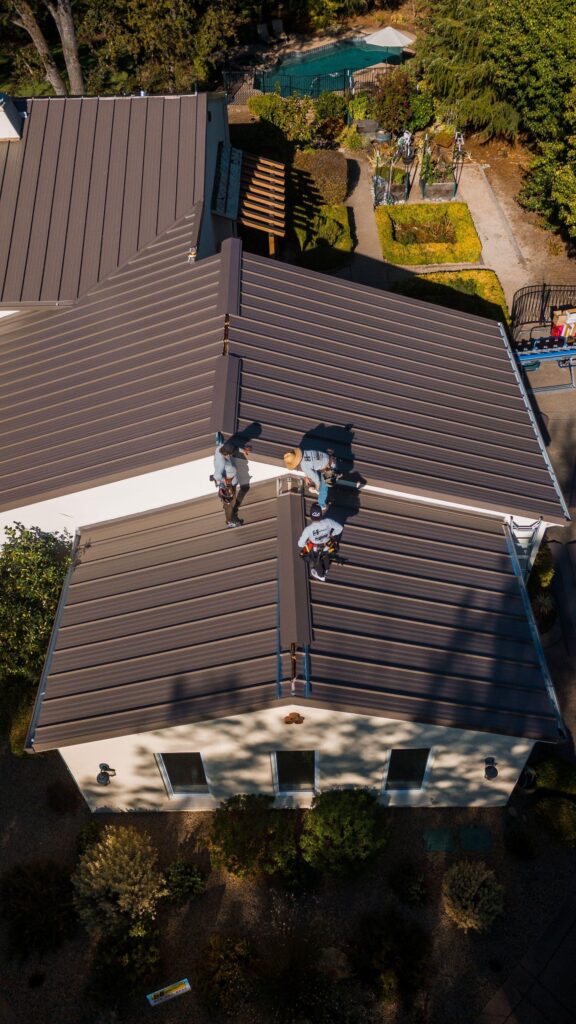
Roofing services in Doctor Phillips, FL
With two heavy cohorts and almost no pre-1970 stock, the work here divides cleanly by decade rather than by street, which is unusual in a community this size.
On the 1980s houses the covering is usually on its second or third layer and the deck is the open question, which is why the first visit opens a valley rather than photographing the field. What a strip and re-cover involves is set out on the roof replacement page, and the judgement between patching and re-covering an existing layer is on the shingle roofing page. Where the plywood at the valleys and pan flashings has gone soft, the strip is the only answer, and finding it early is the difference between a covering job and a covering plus carpentry.
On the 1990s and 2000s houses the field is usually sound and the failures are components: pipe boots, pan flashings at wall junctions, valley metal and ridge closures. That is ordinary roof repair work, and it is the cheapest work on this page while it stays small. A boot that has split admits water straight onto the deck, and on a 2006 house the deck around it is usually sound, which is what keeps the repair small. Where the pitch is shallow and the surface is sound, a coating can buy years rather than a decade, with the trade-offs on the roof coating page.
Homeowners planning past a shingle cycle ask about metal, covered on the metal roofing page, and flat or low-slope sections over garages and additions are membrane work, with the trade-offs on the EPDM page. On a house with a screened enclosure, that membrane question arrives with the covering, because the two roofs meet at a wall that has been flashed once and sealed since. After a storm opens a roof, stopping the water comes first and is covered on the tarping page. Where a wet ceiling has more than one possible cause, the inspection page explains how that is narrowed down, and where an insurer is involved, the insurance claim page covers the documentation a carrier will ask for. Holding a first covering past its accessories is the subject of the maintenance page.
Roof work in Doctor Phillips, FL
Why homeowners in Doctor Phillips choose us
On a community where almost nothing is old, the usual sales argument does not apply. A 2004 house with a stain under a vent stack does not need a new roof, and a 1987 house with a soft valley does not need a repair that will not hold.
Residential Roofing Orlando checks the accessories first on the newer stock and the deck first on the 1980s stock, photographs what it finds, and writes the cause beside the repair in the order the work has to happen. When a covering still has years left, the report says so, and the work stays a repair rather than becoming a replacement the house did not need. On a 1987 house the deck is where that judgement is made, and it is made by opening the roof at a valley and walking it, not by reading the shingle count from the driveway.
What a first visit covers
- We check the accessories first on the 1990s and 2000s roofs, because that is where a young house leaks.
- The attic is opened and the deck photographed at the valleys and pan flashings.
- The number of existing layers is counted on the 1980s houses, where a third covering is a real decision.
- You get the cause and the fix on one page, in the order the work has to happen.
- The Orange County permit route and its inspections are confirmed before a start date is fixed.
What we check before any work is quoted
- Pipe boots and pan flashings: the first components to fail on the 41.5% of the community built since 1990.
- Deck condition: 1980s plywood under a second layer is the deciding factor on 27.7% of the homes here.
- Valley metal: it separates from the bedding it was set into and the gap is invisible from outside.
- Ridge and hip closures: where wind opens a roof that otherwise looks sound.
- Gutters and discharge: with this much water inside the community, roof water needs somewhere to go.
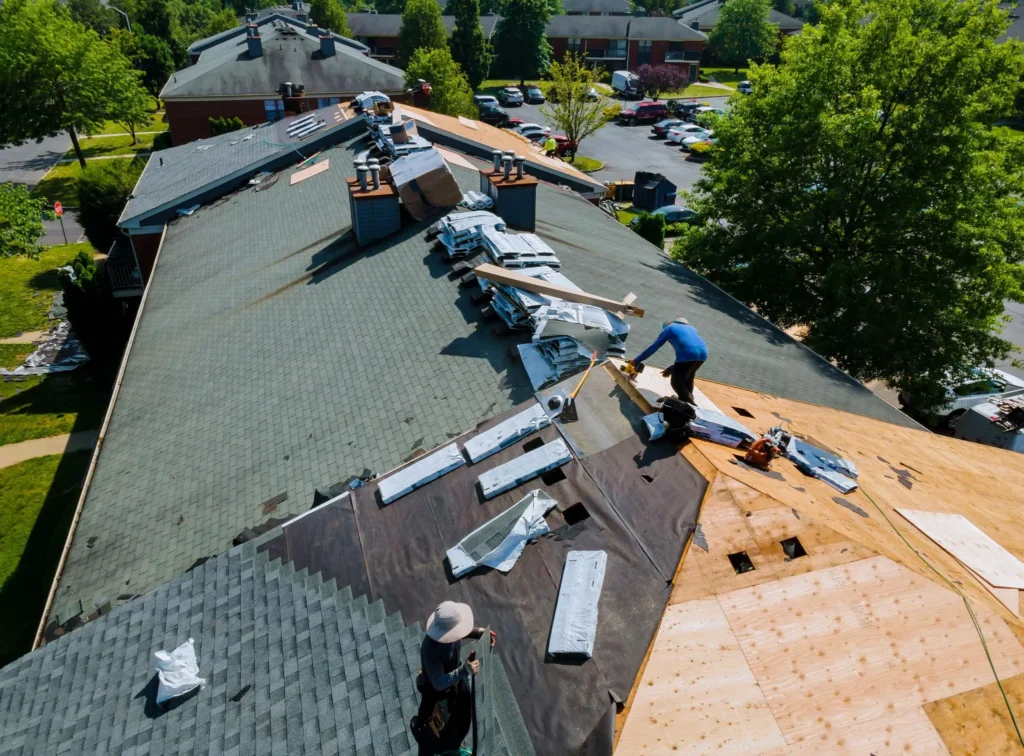
Why now, before another storm season in Doctor Phillips
Doctor Phillips has a timing argument that is easy to state and easy to miss: almost the whole community is between fifteen and forty years old, and both ends of that range are in the same window. That is a different problem from an old city, where the roofs are all failing at once for the same reason and the answer is usually the same for every house on the street.
The 1980s cohort at 27.7% is on a second covering over original plywood, and those roofs are now thirty-five to forty-five years into their lives, with the deck at the valleys and pans the part that decides the next ten. The 1990s and 2000s cohorts, 41.5% together, are on first or second coverings whose field is sound but whose accessories are not. So the community has one group of roofs facing a deck decision and another facing a component decision, in the same neighbourhoods and often on the same street, which is why a quote here has to be written per house rather than per community.
The weather sets the date. Sixty-five thunderstorm wind events across Orange County in ten years is six or seven a year, and 25 of them carried reported property damage, which on a built-out grid means the same afternoon tests every roof in the community. A component failure that would be an afternoon’s work in April becomes a deck repair and a ceiling after a wet July, because the water from a cracked boot or a lifted pan runs along a rafter before it drops.
Insurance closes it. Carriers inspect, surcharge or decline at or past a set roof age, and on a 1997 median build year most of Doctor Phillips has crossed that line, even though the houses still look new and the roofs still shed water most of the time. A written condition report answers that question directly, and it costs nothing like a covering.
Frequently asked questions about roofs in Doctor Phillips
Who issues a roofing permit in Doctor Phillips?
Orange County does. Doctor Phillips is a census-designated place, not an incorporated city, so there is no municipal building department; permits and inspections come from Orange County’s Division of Building Safety. Permit requirements vary by address, so confirm with the county whether your repair needs a permit and which inspections apply.
Why do so few Doctor Phillips homes have old roofs?
Because almost the entire community was built after 1970. Only 0.3% of the 6,281 homes predate 1970, against 25.6% from the 1980s and 25.0% from the 2000s. That means the inspection questions here are about plywood from the 1980s and accessories from the 2000s, not about board sheathing and original felt.
How old are Doctor Phillips’ roofs?
The median home was built in 1997, with 44.7% of the community post-2000 and 25.6% from the 1980s. Most roofs here are on a first or second covering, and the 1980s quarter is the part facing a third-covering decision.
Does living beside water change anything for a roof?
It changes where the water goes. With 1.314 square miles of water inside a community of 3.403 square miles, the ground around the lots is often saturated, so a downspout that discharges at the wall pushes roof water into ground that cannot take more. That reads inside as a leak near the wall.
How long does a 30-year shingle roof last in this climate?
Expect the mid-twenties. The airport station averages 50.73 inches of rain a year, 21.98 inches of it in three summer months, with a July normal maximum of 91.8°F. A first covering on a 2000s house is therefore well into its second half, even where the shingles still look uniform.
What is the 15-year roof rule in Florida?
It is an insurance underwriting practice rather than a building code: many carriers inspect, surcharge or decline at or past fifteen years of roof age. With a 1997 median build year, most of Doctor Phillips is past that line, and an underwriter will want evidence of condition rather than an opinion.
Next step: call (407) 305-0865
Tell us the year the house was built, how many layers are on the roof, and where the stain appears inside, and whether the roof has been replaced once already. Residential Roofing Orlando will open the attic, photograph the deck, count the layers and confirm the county permit route before any work is booked. Call (407) 305-0865.
Where we work around Doctor Phillips
Tile, Repair and the Sand Lake Road Corridor
Doctor Phillips, with a median home value around $530,000, is tile and premium-shingle country — the Bay Hill and Sand Lake Road subdivisions were built to a specification, and their roofs are now in the repair-and-underlayment years. The pattern to know: a tile roof leaking at a valley or a penetration is usually an underlayment failure, not a tile failure, and the fix is a lift-and-relay over new underlayment, not a re-roof quote. Where the covering genuinely is at end of life, the inspection record — photographs, ages, condition — is what the replacement decision, and any insurance conversation, gets built on. Call (407) 305-0865.