A roof quote that grows after the old roof comes off can cause real friction between homeowners and roofers. Often the reason is the roof decking: the layer of wood sheathing under the covering, which cannot be fully judged until it is exposed. This guide explains why roof decking replacement adds to a quote, how Florida’s rules can widen the scope, and how to make sure a decking charge is fair.
What is roof decking and why does it matter?
Roof decking, also called sheathing, is the layer of wood panels or boards fixed to the rafters or trusses. Everything else sits on it: the underlayment, the water barrier and the covering. If the deck is rotted, weak or poorly fastened, a new roof laid over it cannot perform as it should.
The deck does two jobs. It gives the covering a solid base to be fastened to, and it holds the roof together against wind uplift. In a hurricane, wind pulls on the covering, the covering pulls on the deck, and the deck pulls on its fasteners. A deck that lifts takes the covering with it.
That is why Florida’s wind mitigation form treats deck attachment as its own question. The state’s OIR-B1-1802 form asks the inspector for the weakest form of roof deck attachment on the house, from sheathing held by staples or small nails up to sheathing held by larger nails spaced closely.
Why did my roof quote go up after tear-off?
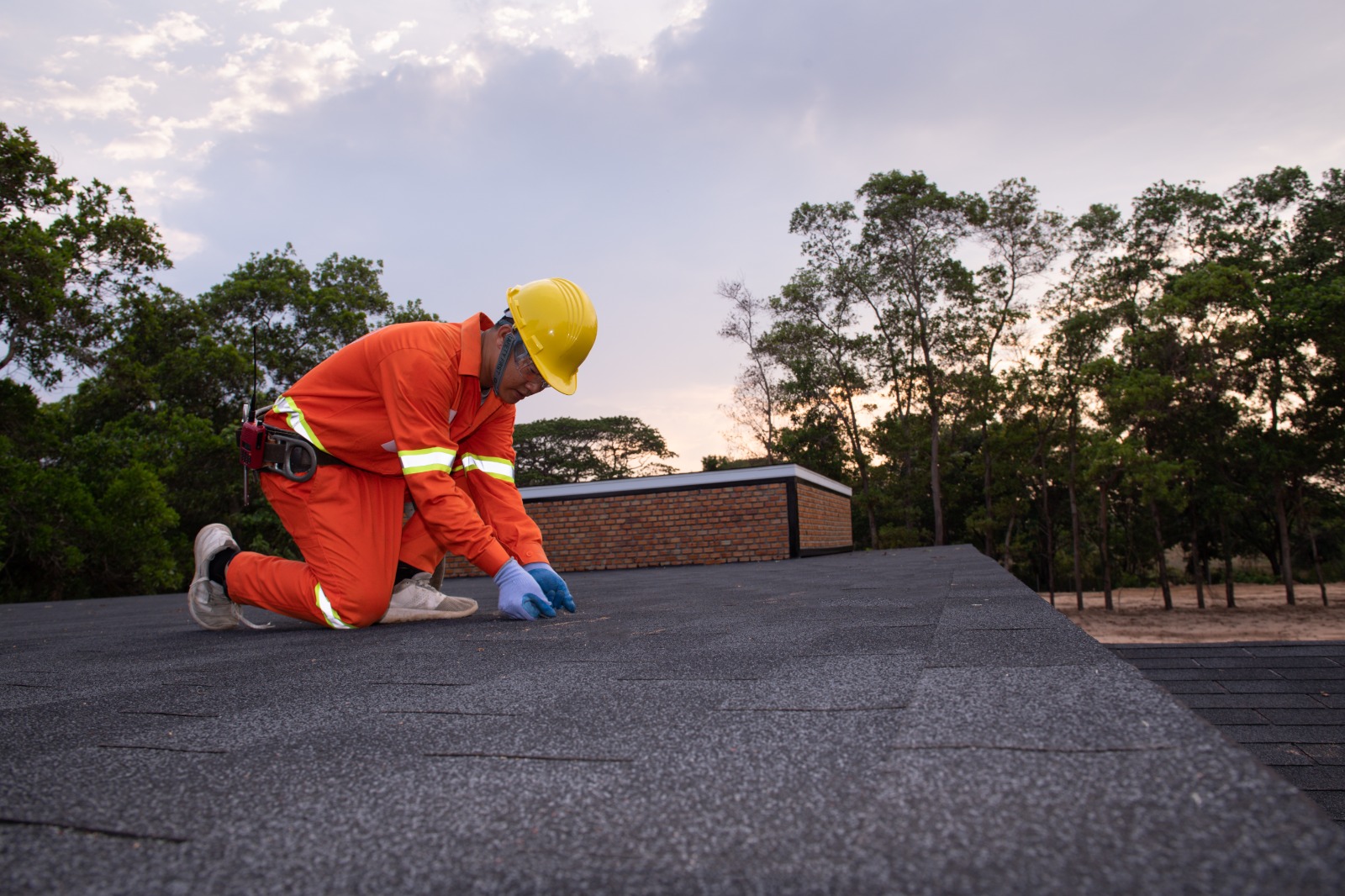
Often because the old roof hid damage to the deck. Rot, soft spots and failed sheathing often cannot be seen until the covering is removed. Once exposed, damaged panels have to be replaced before the new roof goes on, and that work was not in the original price.
A roofer can estimate deck condition beforehand. Soft spots felt underfoot, sagging between rafters, stains on the underside of the deck seen from the attic, and a history of leaks all point to damage. But the full picture only appears at tear-off.
Florida’s insurance inspection forms show how seriously the deck is taken. Citizens’ sample 4-point inspection form lists “soft spots in decking” among the signs of damage an inspector records, along with visible signs of leaks on the underside of the decking.
A fair quote anticipates this. Instead of leaving deck work out, it states a price per panel or sheet for any replacement, so the extra cost is predictable and can be counted.
What causes roof decking to rot?
Water, given time. Decking rots when it stays wet: from a slow leak at flashing or a vent, from water backing up at the roof edge, from condensation in a poorly ventilated attic, or from damage left after a storm. In a hot, humid climate, wood that is repeatedly wetted and slow to dry is vulnerable.
The EPA’s guide to mould and moisture says it is important to dry water-damaged areas and items within 24 to 48 hours to prevent mould growth, and that the key to mould control is moisture control. A roof deck that is wetted over and over, without drying, is the opposite of that.
The common sources of the water are the same places a leak is traced:
- Flashing at walls, chimneys and skylights
- Seals around plumbing vents and exhaust fans
- Valleys and roof edges where water backs up
- Gutters that overflow behind the fascia
- Condensation in the attic
How does Florida’s 25% rule affect the scope of work?
It decides how much of the roof has to meet current code when part of it is repaired. If a roof was built to the 2007 Florida Building Code or later, repairing 25 percent or more requires only the repaired portion to meet current code. Older roofs do not get that exception, which can widen a large repair.
The exception is in section 553.844(5). Its practical effect on a quote is that a big repair on a roof built before the 2007 code can grow in scope, and that can tip the decision toward full replacement.
Many Orange County roofs are in that position. Census figures show 82.9% of the county’s housing units were built before 2010. Year built is only a rough guide to the code a roof was installed under, because many roofs have been replaced since. Ask your contractor and your building department how the rule applies to your roof before you commit to a large repair.
What code upgrades can add to a re-roof?
Florida law expects certain wind upgrades to be considered when a roof is replaced. Strengthening or correcting deck attachment and fasteners, a secondary water barrier, and roof-to-wall connections where a cost test is met. Each adds to the price, and each can also earn insurance credits.
Deck re-fastening
Section 553.844(2) names “strengthening or correcting roof-decking attachments and fasteners during reroofing” as a priority. With the old covering off, the deck’s fasteners can be checked and added to before anything covers them again.
The wind mitigation form shows what this can mean in practice. Its deck attachment categories run from sheathing held by staples or 6d nails, through sheathing at least 7/16 inch thick held by 8d nails spaced at most 12 inches apart in the field, to the same sheathing held by 8d nails spaced at most 6 inches apart in the field. A re-roof is the time to move a weak deck up those categories, and to have the work documented so an inspector can credit it later. Ask for it as a separate line in the quote.
Secondary water barrier
The same section lists a secondary water barrier among the re-roofing measures. It is a sealed layer that limits water entry if the covering is torn off. The wind mitigation form is specific about what counts: it says standard underlayments and hot-mopped felts do not qualify, and describes a qualifying barrier as self-adhering modified-bitumen underlayment applied directly to the sheathing, or a foam adhesive barrier.
Because the barrier sits directly on the deck, it can only be added when the roof is replaced, and only once the deck itself is sound. That links it to decking: rotted panels have to be replaced first. If you want the barrier, make sure the quote names it and its type, so you can show your insurer what was installed and claim any credit it earns.
Roof-to-wall connections
Section 553.844(2) also covers roof-to-wall connections, but with a cost test. They are not required unless evaluating and installing them at gable ends or all corners can be done for 15 percent of the cost of roof replacement. The legislature intends retrofit costs during re-roofing to stay at about 15 percent of the re-roof.
On the wind mitigation form, roof-to-wall connections are graded from toe nails, through clips and single wraps, to double wraps. Clips and straps sit at the top of the walls and are hard to see without access, so a quote should say whether they were checked. Ask whether the cost test was applied to your house, and what it found, so you can see why connections were or were not included.
How is roof decking checked before a quote?
From below and from above. Before tear-off, a roofer can look at the underside of the deck from the attic, walk the roof to feel for soft spots, and check for sagging between rafters. Those checks suggest how much decking may need replacing, but they cannot confirm it until the covering comes off.
What each check can show:
- From the attic. Water stains, dark patches or mould on the underside of the sheathing, rusted nail tips, and daylight showing through gaps all point to wet or damaged decking.
- On the roof. Areas that feel soft or springy underfoot, and covering that dips between rafters, suggest weakened panels beneath.
- From the ground. A sagging roof line or uneven slopes can point to deck or framing problems.
- From the history. Past leaks in a particular area make damage there more likely.
A quote based on these checks can estimate the deck work, but should still give a per-panel price for anything found at tear-off. Homeowners should look only from the attic hatch and the ground. Walking on a roof or across attic framing is a job for a professional.
Can damaged roof decking be repaired instead of replaced?
Damaged sections are generally cut out and replaced with new panels rather than patched. Rotted or delaminated sheathing cannot hold fasteners properly, so a new covering fastened to it would not perform. Sound panels stay in place and can be re-fastened to improve their attachment, which is the work Florida law encourages at re-roof.
The aim is a deck that is solid throughout. Replacing only the damaged panels, and re-fastening the rest, keeps the cost down while giving the new roof a sound base. Ask your contractor to explain which panels they intend to replace and why.
Will insurance pay for new roof decking?
Sometimes. If decking was damaged by a covered event, such as a storm, your claim may include it, subject to your policy and deductible. Rot from long-term wear or slow leaks is a different matter, and policies may treat it differently. Read your policy and ask your insurer before work starts.
Under section 627.0629, insurers must offer discounts or credits for construction that reduces windstorm loss, including roof strength and roof-to-wall strength. Upgraded deck attachment, documented on a wind mitigation inspection, may earn a credit on your premium even if the decking itself was not part of a claim.
How do you make sure a decking charge is fair?
Agree the rules before work starts. The quote should state a price per panel or sheet, and how replaced panels will be counted and shown to you. During the job, ask to see damaged panels and get photos. Afterwards, the invoice should list how many were replaced.
A simple checklist:
- Price per panel in writing before tear-off.
- A count agreed on site. Ask to be called, or sent photos, before panels are replaced.
- Photos of removed panels. Keep them with your invoice.
- Deck re-fastening listed separately from panel replacement.
- The total on the invoice matching the agreed count.
Under section 489.105, a roofing contractor’s scope includes roof-deck attachments and repairing or replacing wood sheathing or fascia as needed during roofing, so this work belongs in your roofing contract, not a separate trade. If you want a quote that prices deck work clearly, Residential Roofing Orlando can inspect the roof and set it out line by line. See our roof replacement service or call (407) 305-0865.
Frequently asked questions
These are short answers to questions homeowners search about roof decking. Each points back to a fuller section above, where the detail and sources sit. Never walk on a roof or an attic’s framing to check the deck; have a professional inspect it.
Can you replace roof decking?
Yes. Damaged sheathing is replaced during a re-roof once the old covering is off, and Florida law includes repairing or replacing wood sheathing as needed during roofing within a roofing contractor’s scope.
When should roof decking be replaced?
When panels are rotted, soft, delaminated or no longer hold fasteners. Signs include soft spots underfoot, sagging between rafters and water stains on the underside of the deck. The full extent is usually confirmed at tear-off.
What should I do if my roof decking is rotted?
Find and fix the water source first, then have the damaged panels replaced as part of the roofing work. Ask for a price per panel, photos of removed panels, and whether deck fastening will be upgraded at the same time.
Will insurance pay for new roof decking?
It depends on your policy and the cause. Decking damaged by a covered event may be included in a claim. Rot from long-term wear or slow leaks may be treated differently. Ask your insurer before work begins.