Dark streaks running down a roof are one of the most visible things about a house, and one of the most misread. Black streaks on a roof are usually algae, not a sign that the roof is failing. But streaks can sit on top of real wear, and the two need telling apart. This guide explains what the streaks are, why they are common in Central Florida, how to deal with them safely, and when they point to a bigger problem.
What causes black streaks on a roof?
Black streaks on a roof are usually algae. The Asphalt Roofing Manufacturers Association (ARMA) says roof discoloration caused by algae usually looks brown to black, and that Gloeocapsa magma is probably the most prevalent of the several algae species involved. The spores travel through the air and settle on roofs.
ARMA’s guidance on algae discoloration makes several points worth knowing:
- It is easy to mistake. The discoloration may be mistaken for fungus, soot, dirt, moss or tree droppings.
- It can be streaky or even. Discoloration may appear uniform or as streaks.
- It changes the roof’s colour. Natural pigments produced by the algae can turn light-coloured roofs gradually dark brown or black.
- It is different from moss. Moss and tree droppings typically cause only localised discoloration.
The streaks show up most clearly on light-coloured roofs. ARMA notes the discoloration is not as visible on darker shades of roofing.
Why are black streaks so common on Central Florida roofs?
Because algae thrives in warm, humid conditions, and Central Florida has plenty of both. ARMA says algae discoloration is most widespread in the Gulf States and along the Northwest and Eastern seaboards, and occurs especially where conditions are warm and humid. Orlando’s long, wet summers fit that description.
The climate figures bear that out. Orange County sits in the hot and humid 2A zone in the Department of Energy’s climate region guide. NOAA’s 1991 to 2020 normals for Orlando International Airport show 8.05 inches of rain in June and more than 6 inches in each of July, August and September (NOAA normals).
ARMA also notes that almost all types of roofing systems are susceptible to algae discoloration, so it is not only shingle roofs that streak. The Department of Energy’s guidelines for selecting cool roofs make a similar point about reflective roofs: some cool roofs in hot, humid environments may be more susceptible to mould or algae growth.
Are black streaks a sign your roof is failing?
Not on their own. Algae streaks change how a roof looks, and ARMA describes them as discoloration. But streaks can make it harder to see real wear underneath, and an older roof can have both. The question is whether the shingles under the streaks are still sound.
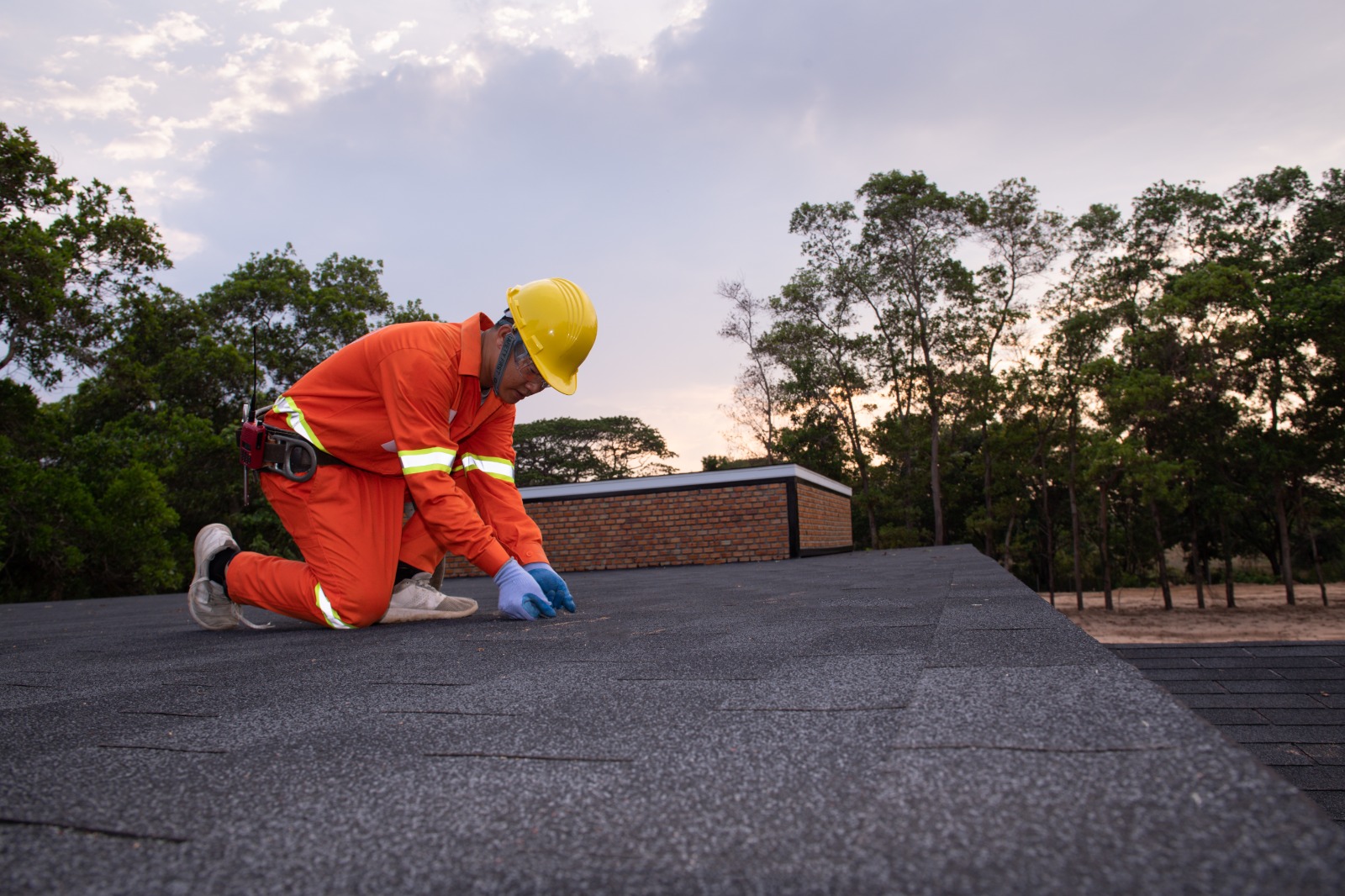
The way to tell is to look past the colour at the shingles themselves. These are signs that point to wear rather than just staining:
- Curling or cupping at the edges or corners of shingles.
- Cracked or missing shingles or tiles.
- Bare patches where the protective granules have worn away, or heavy granule build-up in the gutters.
- Soft spots or sagging between the rafters.
- Leaks or ceiling stains inside the house.
If you see streaks and none of these, you are probably looking at a cosmetic problem. If you see streaks and any of these, have the roof inspected, because the streaks may be the least important thing going on.
How do you tell algae from moss, dirt or damage?
Look at the pattern, the texture and where it sits. Algae tends to form even staining or vertical streaks across large areas. Moss is a raised, green growth in specific spots. Dirt and tree droppings are local. Damage shows in the shingles themselves: curling, cracking or missing granules, not only colour.
Algae streaks
Algae discoloration appears as brown to black staining, either spread evenly or running down the roof in streaks. It is flat, not raised, and it sits on the surface of the shingles. Because the spores travel in the air and settle across the roof, the staining tends to cover broad areas rather than single spots.
Algae shows most on light-coloured roofs and is easiest to see from a distance, where the streaks line up with the slope. Up close, the shingle beneath should still look intact, with its granules in place and its edges lying flat. Streaks that follow the fall of the roof, without raised growth or broken shingles, point to algae. That is the case ARMA describes as discoloration, and it calls for cleaning or living with it, rather than repair.
Moss and lichen
Moss is different. It is a raised, often green growth that forms in particular spots, usually where the roof stays shaded and damp. ARMA notes that moss typically produces only localised discoloration, unlike the broad staining of algae, and says to consult the shingle manufacturer about the effects of moss and how to remove it.
The difference matters because ARMA treats moss as a separate problem from algae, and points homeowners to the shingle manufacturer for its effects and the right way to remove it. If you see thick, raised patches rather than flat staining, it is worth having them looked at, and removed in the way the manufacturer recommends. Do not scrape moss off yourself: it means working on the roof, and scraping can strip granules from the shingles.
Dirt, soot and tree droppings
Some dark marks are not growths at all. Soot, dirt, and droppings from overhanging trees can all darken a roof, and ARMA notes that algae discoloration may be mistaken for any of them. The clue is location: these marks tend to collect under trees, near chimneys or vents, or where water runs off another surface.
Local marks that line up with a tree, a chimney or a runoff path point to these causes rather than algae. Trimming back branches that overhang the roof cuts down on droppings and debris, and lets the roof dry faster after rain. That is a job to do from the ground or with a professional, not by climbing onto the roof. Keeping gutters clear helps the roof shed water quickly as well.
Real wear and damage
Wear shows in the shingles, not just their colour. Curling or cupping edges, cracks, missing pieces, and bare patches where the granules have gone are signs the covering itself is ageing. Granules collecting in the gutters, or dark patches that look like exposed asphalt, point the same way.
The National Roofing Contractors Association says most new roofs are designed to give useful service for about 20 years, depending on climate, materials, installation and maintenance (NRCA). An older roof with streaks deserves a closer look at the shingles, because the staining can hide wear that has been building for years. If you are unsure which you are looking at, a professional inspection will tell you, with photos of each slope.
How do you get black streaks off a roof?
Carefully, and ideally by a professional. ARMA says the discoloration may be lightened with a solution of household bleach and water, but that cleaning is only temporary and the streaks may come back. It also says never to use a power washer, brush or broom, because high-pressure washing is likely to damage asphalt roofing.
ARMA’s guidance on cleaning, in summary:
- Use a professional. The cleaning makes the roof slippery, and ARMA encourages using professionals. It warns that only trained professionals should walk, climb or work on a roof.
- No power washing, brushes or brooms. High-pressure washing is likely to damage asphalt roofing and should not be used for algae or any other cleaning.
- Do not scrub. Friction can loosen and remove granules.
- Follow the manufacturer. Mixing directions vary between shingle manufacturers, and other chemicals or methods should not be used without the manufacturer’s approval.
- Protect the surroundings. The solution should be applied carefully to avoid damage to other parts of the building and to plants.
Expect the streaks to return in time, especially in Orlando’s climate.
Do black streaks affect an insurance inspection?
The roof section of an insurance 4-point inspection records the condition of the shingles, not their colour. Citizens’ sample 4-point inspection form asks the inspector to note visible damage or deterioration and any signs of leaks, and requires photos of each roof slope.
The damage items the form lists are:
- Cracking
- Cupping or curling
- Excessive granule loss
- Exposed asphalt or exposed felt
- Missing, loose or cracked tabs or tiles
- Soft spots in the decking
- Visible hail damage
It also asks whether there are visible signs of leaks in the attic, on the underside of the decking or on interior ceilings. Algae discoloration is not one of the listed items. Streaks can still make a roof look older in photos, and they can hide some of the listed damage, so it is worth having the shingles checked before an inspection if your roof is heavily streaked.
Can you stop black streaks from coming back?
Not permanently by cleaning alone, because ARMA says cleaning is only temporary. The longer-term option comes at re-roof: ARMA notes that algae-resistant shingles are available and are designed to inhibit algae growth for extended periods. In the meantime, trimming overhanging branches lets the roof dry faster.
When you next replace the roof, ask each contractor whether the shingles they quote are algae-resistant, and ask for the manufacturer’s written terms on algae resistance. Those terms vary by product, so read them rather than relying on a sales description.
Are black shingles a good or bad choice in Florida?
Shingle colour is a trade-off. Algae streaks show least on darker shingles, as ARMA notes. But dark roofs absorb more heat: the Department of Energy’s cool roof guidelines say traditional dark roofs can reach 150°F or more in summer sun, while cool roofs stay much cooler and achieve the greatest savings in hot climates.
There is no single right answer. A lighter or reflective roof can help with cooling but shows streaks more readily, while a darker roof hides streaks but runs hotter. Your HOA may also have rules on roof colour. Weigh appearance, cooling and any HOA rules together. If the streaks are just algae, Residential Roofing Orlando can check the shingles underneath and talk through maintenance. See our roof maintenance service or call (407) 305-0865.
Frequently asked questions
These are short answers to questions homeowners search about black streaks on roofs. Each points back to a fuller section above. Do not climb onto a roof to inspect or clean it; ARMA recommends that only trained professionals work on roofs.
What causes black streaks on my roof?
Usually algae. ARMA says algae discoloration usually looks brown to black, that Gloeocapsa magma is probably the most prevalent species involved, and that it is most widespread in warm, humid regions such as the Gulf States.
What are the black lines on my roof shingles?
Most often algae streaks, which can appear as even staining or as streaks running down the slope. They can be mistaken for dirt, soot, moss or tree droppings, which tend to be more localised.
How do you get black streaks off your roof?
ARMA says a solution of household bleach and water can lighten the streaks, but only temporarily. Never use a power washer, brush or broom, follow the shingle manufacturer’s directions, and use a professional because the roof becomes slippery.
What do streaks on a roof mean?
On their own, streaks usually mean algae discoloration rather than failure. Check the shingles too: curling, cracking, bare patches or granules in the gutters point to wear that needs an inspection.
Are black shingles good or bad?
It is a trade-off. Darker shingles show algae streaks less, but dark roofs absorb more heat. The Department of Energy says cool, reflective roofs achieve the greatest cooling savings in hot climates.
What are signs your roof is bad?
Curling or cracked shingles, missing pieces, bare patches where granules have worn away, granules in the gutters, soft or sagging areas, and leaks or ceiling stains inside. Any of these is a reason for an inspection.