How Do You Know If You Need a New Roof in Orlando FL You probably need a new roof in Orlando if your shingles are 18–20+ years old, you’re seeing granule loss in your gutters year-round, you’ve had recurring leaks in different spots, or a licensed contractor has found widespread underlayment or decking damage. Those are the clearest signals. Everything else — isolated shingle loss, a single flashing failure, one leak near a chimney — is almost always a repair situation.
Florida damages roofs faster than almost any other state. In our 14 years inspecting and repairing roofs across Orlando, Winter Park, Kissimmee, Sanford, and Orange County, the same seven causes show up again and again. Understanding them is the fastest way to catch a problem before it turns into a costly replacement.
The 7 Most Common Causes of Roof Damage in Florida Homes
1. Hurricane and High-Wind Damage
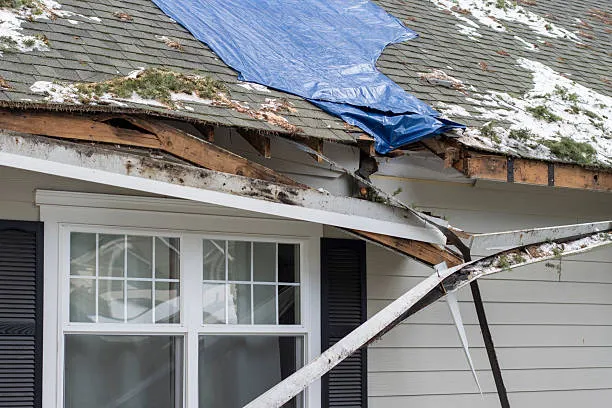
Wind is the single most destructive force acting on Orlando-area roofs. Even inland Orange and Osceola counties see 100+ mph wind gusts during significant storms — and those gusts don’t need to be hurricane-force to cause serious damage. Tropical storms, pop-up thunderstorms, and the sustained winds that precede and follow named storms all stress your roof every season.
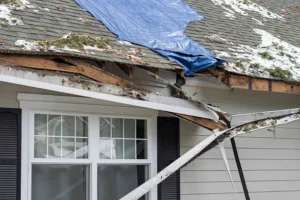
Strong winds create pressure beneath shingles and lift them from the edges — once wind gets under one shingle, it can create a chain reaction that tears off entire sections during a storm. What starts as a few lifted shingles becomes a water intrusion point within the first heavy rain after the event.
Signs to watch for: Missing shingles, visible lifted edges from the ground, granules in gutters following a storm, and ceiling stains appearing within 48 hours of heavy weather.
Florida Building Code requires specific wind resistance standards for Orange County roofing. Homes built before 2002 may not meet current requirements — a full code-compliant replacement significantly improves storm performance for pre-2002 construction.
For immediate post-storm damage, our storm damage roof repair service covers emergency assessment and tarping across Central Florida.
2. UV Exposure and Extreme Heat
Florida’s UV intensity is relentless. The intense sun and constant UV exposure crack, warp, and strip the protective granules from shingles over time — and here it happens faster than in almost any other US market.
Homeowners in Winter Park, Lake Mary, and Kissimmee with south- or west-facing roof planes bear the brunt of afternoon UV year-round. The granules embedded in asphalt shingles exist specifically to block UV — when you see them filling your gutters consistently, not just after a storm, the shingles are in late-stage degradation. Florida’s UV intensity shortens asphalt shingles’ effective lifespan to roughly 15–20 years compared to 25–30 years in cooler climates.
Signs that tell you how to tell if a roof needs to be replaced from UV damage: widespread granule loss across multiple roof planes, cracking or cupping shingles, and shingles that feel brittle when touched.
If you’re seeing these patterns, contact our roof repair in Orlando team for a free inspection before minor deterioration becomes a full replacement trigger.
3. Moisture, Humidity, and Trapped Water
Florida’s average relative humidity hovers between 74–90% depending on the season. That moisture doesn’t stay outside — it migrates through roofing systems, condenses in attics, and accelerates decay in wood decking and framing that’s completely invisible from the exterior.
Humidity creates perfect conditions for mold and algae growth. Dark streaks on your roof aren’t cosmetic — mold and algae on Florida roofs deteriorate roofing materials and reduce their effectiveness measurably over time.
How do you know if you need a new roof from moisture damage? The most telling signs aren’t on the roof — they’re inside. Stains on interior ceilings, musty smells in attics, and soft spots in the attic decking all indicate moisture has been working through your roof system for an extended period. By the time water stains appear on living area ceilings in a Thornton Park or College Park home, the underlying damage is typically significant.
4. Flashing Failures Around Penetrations
Flashing is the thin metal material sealing joints where your roof meets chimneys, vents, skylights, AC equipment curbs, and wall intersections. It’s one of the most common entry points for water — and one of the most misdiagnosed problems we see.
In Orlando’s climate, flashing sealants dry out and crack faster than in cooler states. Every roof penetration is a potential leak point, and most homes have 8–15 penetrations. If your roof is leaking near a chimney, vent, or skylight and the shingles look intact, failed flashing is almost always the culprit. Flashing repairs typically run $200–$800 and are a repair situation — not a replacement trigger — when caught early.
5. Algae and Biological Growth
Those dark streaks running down Florida roofs are Gloeocapsa magma — a cyanobacteria that feeds on the limestone filler in asphalt shingles. Left untreated, algae and lichen colonies retain moisture against the shingle surface, accelerating granule loss and shortening shingle life measurably.
In shaded areas — particularly north-facing sections in Sanford and Altamonte Springs neighborhoods under tree canopy — moss can establish with root structures that physically pry shingle tabs apart over time.
Warning signs roof needs to be replaced from biological growth: extensive dark streaking across most of the roof, green moss patches on shingle surfaces, and shingles that appear soft or spongy in affected areas. Early-stage algae is a maintenance issue. Advanced algae combined with granule loss on an older roof is a replacement signal.
6. Poor Installation or Non-Code Work
This is the cause homeowners least expect — but one we encounter regularly across Central Florida. Non-compliant roofing work can result in failed inspections, required tear-off and reinstallation, fines, difficulty selling the home, and insurance claim complications. Florida insurers can and do deny claims for roofs not installed to code.
Specific non-code installation patterns we see regularly: improper nail patterns leaving shingles under-fastened and vulnerable to wind uplift; missing or inadequate underlayment failing during wind-driven rain; and flashing installed without proper sealing at penetrations. Florida Building Code requires specific underlayment specifications, enhanced fastening patterns, and proper flashing installation at all penetrations and edges.
How can you tell if you need a new roof because of installation failures? If your roof is under 10 years old and showing damage that shouldn’t exist yet — widespread lifting, early granule loss, or leaks at multiple penetrations — poor installation is a serious possibility. Verify any contractor at myfloridalicense.com before hiring. Our roof replacement team installs to current Florida Building Code standards with full permitting throughout Orange County.
7. Neglected Maintenance
Neglecting routine maintenance is one of the most common causes of accelerated roof damage we see across the Orlando metro. Small issues like cracked shingles or clogged gutters escalate quickly — and in Florida’s climate, they escalate faster than anywhere else in the US.
Clogged gutters cause water to back up under roofing material during heavy rain. Orlando averages over 50 inches of rain per year, so a $200 gutter cleaning deferred becomes a $1,500 fascia replacement within two rainy seasons. It’s a pattern we’ve seen dozens of times across Apopka, Ocoee, and Maitland.
If you need a new roof partly because of deferred maintenance, it’s worth building a proactive plan going forward. Our roof maintenance tips for Orlando homeowners covers what you should be doing each year.
How to Know If Your Roof Has Been Damaged
The seven causes above each produce recognizable signs — but not all are visible from the ground. Here’s what to look for from street level and from inside.
From outside (ground level):
- Missing, curling, or visibly cracked shingles
- Dark streaking or green patches on roof surface
- Granules accumulating in gutters or at downspout outlets
- Sagging or uneven roof planes
- Lifted or missing flashing at chimneys, vents, or edges
From inside (attic inspection):
- Daylight visible through the roof deck
- Water stains or dark streaking on rafters or decking
- Soft spots or spongy areas when walking on attic floor
- Musty odor indicating active mold growth
- Wet or discolored insulation
If you’re seeing any combination of these roof replacement signs, the next step is a licensed inspection — not a YouTube repair attempt. For the full repair vs. replacement decision framework, see our Roof Repair vs Replacement in Orlando guide. If pricing is the primary question, our roof repair cost guide for Orlando covers what each repair type realistically costs in the 2026 market.
Frequently Asked Questions About Roof Damage in Florida
How do you know if you need a new roof in Florida? The clearest indicators: your roof is 18–20+ years old, you have widespread shingle deterioration across multiple sections, you’ve had repeated leaks in different areas despite repairs, granules are consistently filling your gutters, or a Florida DBPR-licensed contractor has assessed the system and recommended replacement. Florida’s UV intensity and storm exposure compress roof lifespans compared to national averages — what signals “needs attention” elsewhere often signals “needs replacement” in Orlando. When in doubt, get a free inspection.
What are the most common signs a roof needs to be replaced in Orlando? The most reliable signs your roof needs replacing in Central Florida: age past 18–20 years for asphalt shingles, widespread granule loss filling gutters year-round, shingles curling or cupping across multiple roof planes, recurring leaks at different locations despite prior repairs, sagging or soft spots visible from the attic, and dark staining or mold in attic space. Florida’s climate accelerates all of these compared to cooler-climate national roofing guides.
Can Florida humidity alone damage a roof without storms? Yes — and it’s one of the most underappreciated causes of roof damage in Central Florida. Humidity creates perfect conditions for mold and algae growth, which deteriorate roofing materials and reduce their effectiveness over time. Moisture migrating through inadequately ventilated attic spaces causes wood rot, underlayment delamination, and insulation damage — none visible from outside until the damage is well advanced. Annual attic inspections are the only reliable early detection method.
How often should Florida homeowners inspect their roofs? At minimum twice per year — once in spring before hurricane season opens June 1, and once in late fall after it closes November 30. After any named storm or severe event, add an unscheduled inspection. Even newer roofs benefit from a pre-hurricane check: installation defects, nail pops, improper flashing, and wind uplift vulnerabilities can be present on roofs just a few years old. Our team offers free roof inspections across Orlando and surrounding Central Florida communities.
See Damage on Your Roof? We Offer Free Inspections Across Orlando.
The earlier you catch any of these seven causes, the less it costs to address. A flashing failure caught in April is a $200–$800 repair. The same failure left through hurricane season is a $2,000+ deck repair with interior damage on top.
Our Florida DBPR-licensed roofing team provides free roof inspections across Orlando, Winter Park, Kissimmee, Sanford, Lake Mary, and Altamonte Springs. We’ll tell you exactly what we find — no pressure, no upsell, just a straight assessment from a contractor who knows Central Florida roofs.