If a hurricane has just passed and someone is hurt, you smell gas, there is a fire, or the structure looks unstable, call 911 now and get everyone out. The roof can wait. Hurricane roof damage is repairable; injuries from downed lines, falling ceilings and falls from roofs are not. This guide sets out the order to work in once everyone is safe.
What should you do first after hurricane roof damage?
Deal with people before property. Check that everyone is safe, call 911 for injuries, fire or a gas smell, and leave the house if walls, ceilings or the roof structure look unstable. Only when the immediate dangers are handled should you start looking at the roof, and then only from the ground.
Work through this order:
- Emergencies first. Injuries, fire, gas smells and trapped people go to 911. Do not wait to assess the roof.
- Leave if the structure is in doubt. Sagging ceilings, cracked walls or a roof that looks displaced are reasons to get out and stay out.
- Stay clear of power lines. Treat every downed line as live and report it to your utility or to 911.
- Keep out of wet rooms with power. Water and electricity together are a hazard. Stay out of flooded areas where outlets or appliances may be live.
- Then look, from the ground. Only once the above is handled should anyone start assessing roof damage.
The National Hurricane Center’s report on Charley records a death in Orange County when strong winds blew a moving van into a vehicle. Wind that can move a van can move debris and power lines too. NHC Charley report.
Why should nobody go on the roof right after a storm?
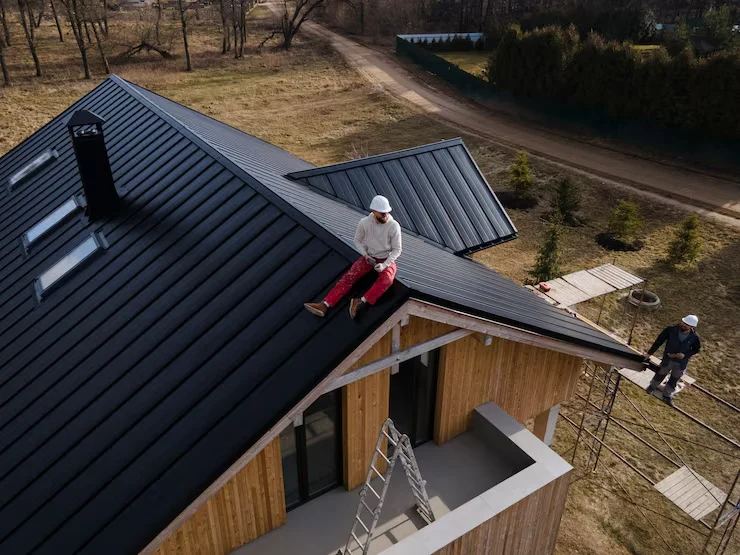
A storm-damaged roof is one of the most dangerous places around a house. Surfaces are wet, debris is loose, decking may be weakened, and tiles crack underfoot. Further storms can follow the main system. Nobody should climb onto it until the weather has cleared and a trained professional with proper equipment has judged it safe.
The hazards stack up:
- Wet and damaged surfaces. Rain-soaked shingles, tiles and metal give poor footing, and damaged sections may not hold weight.
- Hidden weakness. A deck that has been soaked or partly torn can give way without warning.
- Lightning and follow-on storms. The National Weather Service notes that central Florida leads the country in thunderstorm days in summer, and that the inland area is often called the “Lightning Capital of the United States”. Being on a roof or ladder in a storm is a serious risk.
- Tornadoes in the rain bands. Milton produced at least 16 confirmed tornadoes across east-central Florida, according to the National Weather Service. Dangerous weather can continue after the eye has passed.
Ladders on soft, wet ground are a hazard of their own. If a job needs a ladder or a roof walk, it is a job for a professional.
What are the signs that your roof was damaged by a storm?
Look for damage you can see safely from the ground or from inside. Outside, that means missing or shifted shingles or tiles, lifted edges, exposed underlayment or bare decking, and debris on the roof. Inside, it means new ceiling stains, drips, sagging ceilings and wet insulation. Each is a reason to have the roof inspected.
From the ground, outside:
- Missing, cracked or shifted shingles, tiles or metal panels.
- Edges or ridge caps that are lifted or hanging.
- Patches where the underlayment or the bare wood deck shows through.
- Branches or debris lying on the roof.
- Damaged gutters, fascia or soffits, which can let wind-driven rain in at the eaves.
- Shingle or tile pieces in the yard.
From inside, if it is safe:
- New brown stains or wet patches on ceilings.
- Water dripping from light fittings or ceiling joints.
- Ceilings that sag or bulge, which can mean water is pooling above. Keep out of the room.
- Daylight or wet insulation in the attic, viewed from the hatch only.
These are the things an inspection checks first. Seeing none of them does not mean the roof is undamaged, because some damage is only visible up close. If the storm was severe, have the roof inspected even if it looks intact.
How do you document hurricane roof damage for your insurer?
Record everything before anything is moved or repaired, as long as it is safe to do so. Take dated photos and video from the ground and from inside, keep any debris that fell, and save every receipt for emergency work. Good records make a claim easier to support and harder to dispute.
A practical checklist:
- Photos and video, taken from the ground, of every side of the house and roof, plus close-ups of any fallen material.
- Inside photos of ceilings, walls, floors and belongings affected by water.
- Dates. Note the date of the storm and when you first saw each problem.
- Temporary repairs. Keep the invoice and photos for any tarping or emergency work, and photograph the damage before it is covered.
- Before photos. If you photographed the roof before the storm, keep those with the after set.
Do not throw away damaged materials until your insurer says you can. Ask them what they need from you.
Does home insurance cover roof damage from a hurricane?
It depends on your policy. What you receive turns on your hurricane deductible, any separate roof deductible, and what the policy covers. Florida law requires a separate roof deductible to be displayed prominently with its dollar amount, so read your declarations page and ask your insurer what applies before you start repairs.
Under section 627.701:
- Insurers must offer hurricane deductibles of 2%, 5% and 10% of the dwelling limit, along with a fixed-dollar option.
- A policy with a separate roof deductible must state it on the page immediately behind the declarations page, in bold type, warning that it may result in high out-of-pocket expenses, and must show its actual dollar value.
Roof age can also matter for coverage. Under section 627.7011, roof age is counted from the last date the whole roof surface was built or replaced to the code in force at the time.
Every policy differs. Your insurer, or your agent, is the only reliable answer to what your policy covers.
How long do you have to file a roof damage claim in Florida?
Florida sets firm deadlines. A new or reopened claim is barred unless the insurer was notified within 1 year of the date of loss. A supplemental claim, for additional damage on a claim already made, is barred unless notified within 18 months. Report damage as soon as you safely can.
That rule is in Florida’s claim-notice statute. Reporting promptly also helps your insurer see the damage close to how the storm left it. Keep a note of the date and how you reported the claim.
Who should tarp a roof after a hurricane?
A professional. Tarping means working on a wet, damaged roof, often with more weather on the way, and it is the kind of work at height where falls happen. A tarp properly fastened by a trained crew limits further water damage. Indoors, catch drips and move belongings while you wait.
While you wait for help, there is useful work you can do safely at ground level:
- Move furniture, electronics and valuables away from wet areas.
- Put buckets or containers under drips, and change them before they overflow.
- Keep people and pets out of rooms with sagging ceilings.
- Photograph the damage before anything is covered.
Ask whoever tarps the roof for an itemized invoice and before-and-after photos, because your insurer may ask for both. Residential Roofing Orlando provides blue roof tarping to protect a storm-damaged roof until it can be repaired. Call (407) 305-0865.
What does a roof inspection check after a hurricane?
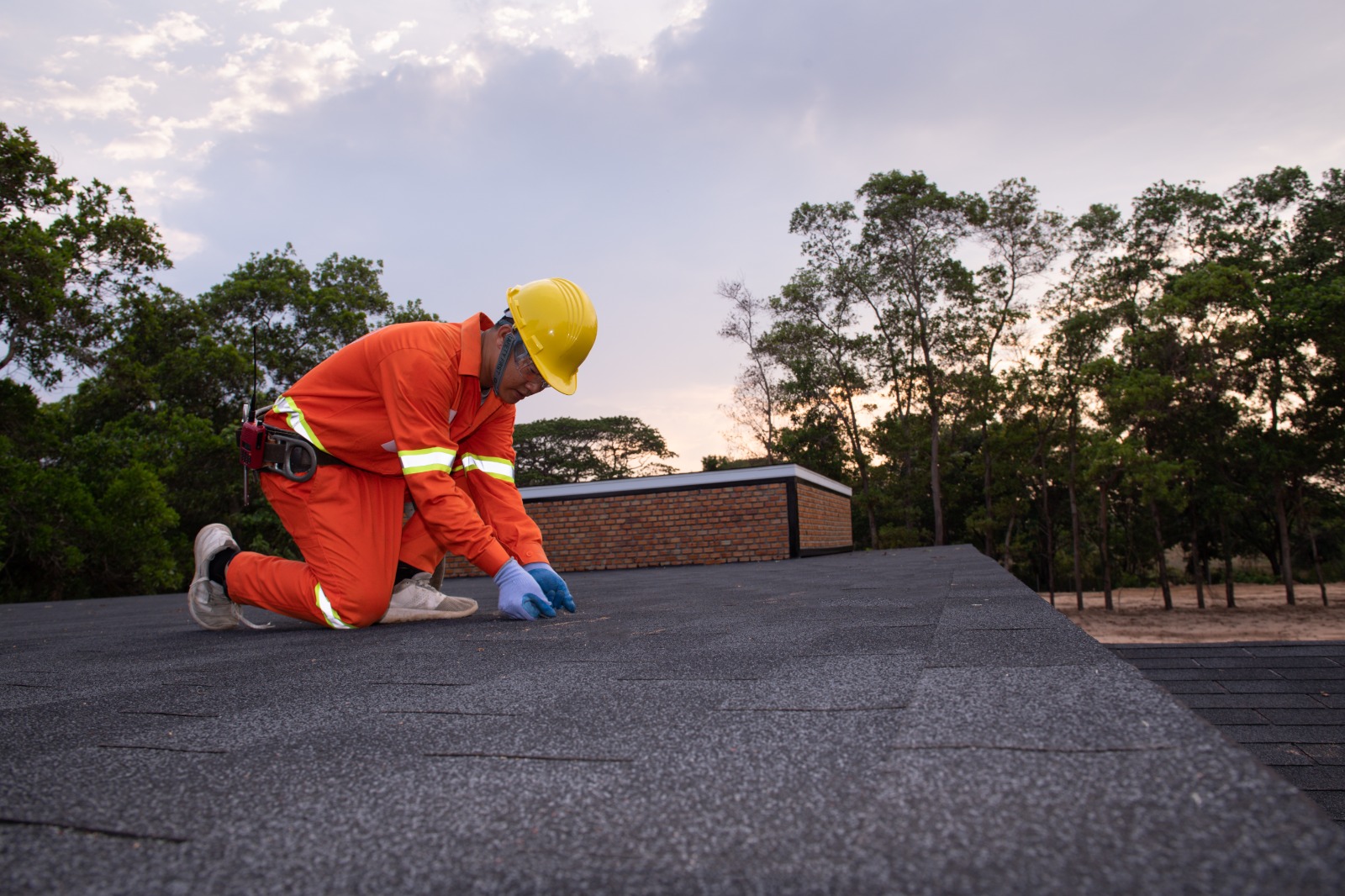
A post-storm inspection works through the whole roof system, not just the visible surface. It checks the covering, the flashing and penetrations, the edges and ridge, the deck where it can be seen, and the attic underneath. The result should be a written report with photos that you can share with your insurer.
What an inspector checks, and why:
- The covering. Missing, cracked, lifted or shifted shingles, tiles or panels, and whether sealed shingle tabs have been broken loose.
- Edges and ridge. Drip edges, rakes and ridge caps, checked for lifted or loose sections.
- Flashing and penetrations. Where the roof meets walls, chimneys, vents and skylights, gaps let wind-driven rain in.
- The deck. Soft spots, exposed wood and any sheathing that has lifted or come loose.
- The attic. Wet insulation, water trails on the underside of the deck, daylight showing through, and the condition of the roof-to-wall connections where they can be seen.
- Gutters, fascia and soffits. Damage here can let water into the eaves and walls.
Ask for the findings in writing, with photos of each item. If your roof is 15 years old or more, the same visit can also document its remaining useful life, which matters for insurance under section 627.7011.
What happens between the damage and the repair?
A storm repair involves several steps before anyone works on the roof: assessment, paperwork and permits. The usual sequence is temporary protection, an inspection, your insurer’s adjuster visit, a written estimate, a permit where one is needed, and then the repair. Knowing the order helps you avoid steps done twice.
- Temporary protection stops further water damage while everything else is arranged.
- An inspection records what was damaged and how.
- Your insurer’s adjuster visits to assess the claim. Have your photos, inspection report and receipts ready.
- A written estimate sets out the repair scope, item by item.
- A permit, where the work needs one. Orange County’s roof permit application covers repairs as well as re-roofs.
- The repair, followed by the permit’s final inspection, which becomes part of your roof’s record.
The repair scope can depend on the roof’s history. Under section 553.844(5), if your roof was built to the 2007 Florida Building Code or later, only the repaired part needs to meet current code, even when 25 percent or more is repaired.
How do you avoid a bad contractor after a storm?
Check before you sign. Verify the contractor’s licence with the state, refuse any offer of gifts or deductible waivers in exchange for an inspection or a claim, and do not sign anything that hands over your insurance benefits. Florida law bans those practices, and a contractor who offers them is telling you something.
- Licence. Look the contractor up on the state’s licence search by name or licence number.
- Inducements. Under section 489.147, a contractor may not offer a gift, cash, a gift card or a deductible waiver in exchange for inspecting your roof or for you making a claim.
- Assignment of benefits. For policies issued on or after January 1, 2023, section 627.7152(13) makes any attempt to assign post-loss benefits void.
- Pressure. Be wary of anyone who pushes for a signature on the spot. A written, itemized estimate you can compare is reasonable to ask for.
These are summaries, not legal advice. For a specific claim or contract, check with your insurer or an attorney.
Frequently asked questions
These are short answers to questions Florida homeowners search after a hurricane. Each points back to a fuller section above. Insurance rules and deadlines matter here, so confirm anything that affects your claim with your insurer or an attorney, and call 911 for any emergency before thinking about the roof.
What are the signs that my roof has been damaged by a storm?
From the ground: missing or shifted shingles or tiles, lifted edges, exposed underlayment or decking, and debris on the roof. Inside: new ceiling stains, drips, sagging ceilings and wet insulation. Any of these is a reason to have the roof inspected.
Does home insurance cover roof damage from a storm?
That depends on your policy, your hurricane deductible and any separate roof deductible. Florida requires a separate roof deductible to be shown prominently with its dollar amount. Read your declarations page and ask your insurer before starting repairs.
How long do you have to claim roof damage from a storm in Florida?
A new or reopened claim must be reported to the insurer within 1 year of the date of loss, and a supplemental claim within 18 months. Report as soon as you safely can.
What is the 25% rule for roofs in Florida?
It concerns when repairing part of a roof requires more of it to meet current code. Under section 553.844(5), a roof built to the 2007 Florida Building Code or later needs only the repaired portion brought to current code, even at 25 percent or more.
Can I tarp my roof myself after a hurricane?
Climbing onto a wet, storm-damaged roof is dangerous, and falls are a real risk. Have a trained professional tarp it. Meanwhile, catch drips indoors, move belongings away from water and photograph the damage for your claim.